The Habits of American Robins: Master Nest Builders
- Robins lay eggs for first nests beginning in April-May depending on location.
- One egg laid each day until average clutch size of 4 blue eggs.
- Those that breed in northern areas migrate south while others spend winter in heavily wooded areas.
Description: Size, Field Marks
American Robins (Turdus migratorius) have gray upperparts and the familiar reddish breast, varying from pale rust to a dark brick red.
They are in the family of "Thrushes" which includes the Eastern Bluebird.
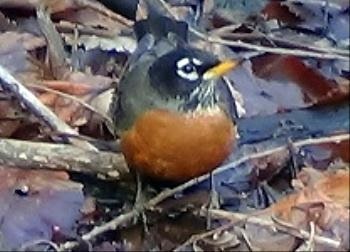
Males and females look nearly identical. A side by side comparison will show that the female colors are less vibrant.
Sometimes during nesting season, you'll see mud on the breast of a female since she is the one that lines the nest with mud.
The average size of an adult Robin is 9 to 11 inches long.
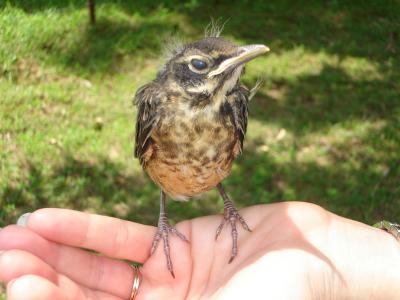
Juvenile Robins are like adults but are spotted on the breast and have shorter tails when they first fledge.
Often, you'll see these birds hopping on lawns, meadows, and golf courses looking for earthworms. They also eat insects, fruit, and berries.
Breeding Season
Robins defend territories for weeks before they even start a nest. Their breeding season lasts longer than their nesting season. See the difference between breeding and nesting season.
At the start of the season, the male's song is to advertise his territory or to attract a mate. You'll hear them the most just before the young hatch.
The typical American Robin breeding season runs from April to July. Although, nest building may begin as early as March, in some southern states.
Nesting Habits
The Robin's nesting habits begin with building what most people think of when they think bird nest, a perfectly round nest with a mud base, grasses lining the outside, and softer materials used inside for the eggs to rest on.
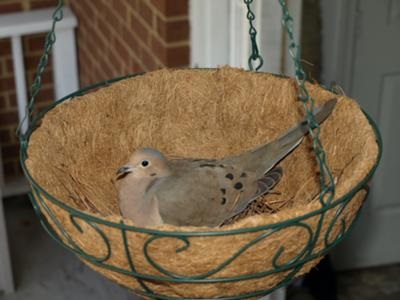
Their nests are so well built that it's not uncommon to find Mourning Doves reusing them to raise young.
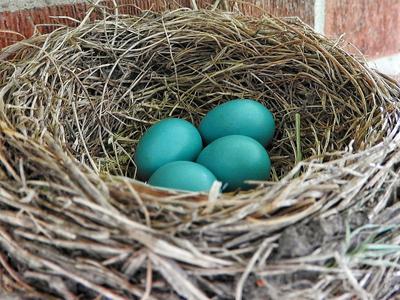
The nest is placed in the crotch of a tree or shrub 5-20 feet above the ground.
The availability of mud at nesting time may entice these birds to nest nearby. They will also make use of wool, string, and animal fur.
These birds can produce up to three successful broods in one year. On average, two clutches are raised with less than half being successful.
These birds are very protective of their nest and territory. They even fly repeatedly into windows attacking their reflection.
Only a quarter of those that fledge survive until November. From that point on, about half of the birds alive in any year will make it to the next.
According to the Cornell Lab of Ornithology, the total population turns over on average every six years.
Egg Laying, Incubation
The female lays 3-7 light blue eggs that she alone incubates. The Robin's eggs will hatch 12 to 14 days after being laid.
After hatching, she broods the young until they can regulate their temperatures. This process takes about a week.
After the first week, the female no longer spends the night in the nest. The young will stay in the nest about 14 to 16 days after hatching.
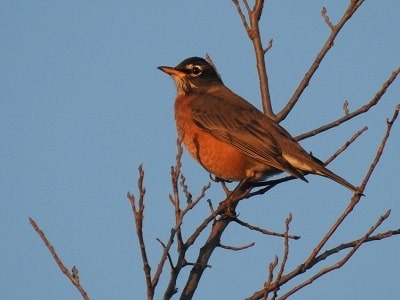
Robins will return to the same territories from season to season. Sometimes they build a new nest on top of their old one.
I've personally seen as many as three on top of one another. However, Robins do not reuse their nest.
Chart: Quick Nesting Stats
| Robin Nesting Stats | |
|---|---|
| Eggs | 3 - 7 (average 4) |
| Incubation | 12 - 14 days |
| Nestling Phase | 14- 16 days |
| Broods | 2 - 3 |
Can I Remove a Robin Nest?
Sometimes Robins nest on porch lights or other structures where you don't like them to be. It's illegal to remove any active nest with eggs or young in them.
Once nesting is over, It's a good idea to remove the old nests in baskets and off of downspouts and rafters in the fall so that parasites don't overwinter.
Removing the nest protects future broods should they return to the same site because parasites may travel from the old nest to the new nest.
Sometimes a single female will build several nests close to one another. She will eventually select one to raise her young in.
This practice requires more study to understand why multiple nest are built before laying eggs.
Call: Understanding Their Songs and Sounds
Often the first bird song in the mourning is that of the American Robin. Described as a "cheerily, cheer-up, cheerio" or "cheer-up, cheerily, cheer-up" pattern.
The song is typically clear and flute-like, with each note rising and falling in pitch.

Nest Boxes
Robins do not use traditional nest boxes or bird houses. Instead, they can be attracted to nesting ledges and nest shelves.
In the video below you can see a female building a nest in a man-made structure a friend gave me. Three young fledge from this nest.
Do They Mate for Life?
When Robins pair at the beginning of the breeding season, they mostly stay together through several broods. Extra pair copulation is common.
If one of the pair dies, the other will find a new mate. Nest with young may be tended by remaining adult. Abandonment of eggs may occur.
Robins do not mate for life. At the end of the breeding season, flocks are formed and feed together during the winter.
Pairs may return to the same territory and re-mate seasonally. This is more about selecting the territory and not the mate.
Diet: Food Preference Changes Seasonally - Summer and Winter
Everyone has seen a Robin eating a worm from their lawn, but that's not all they eat. Robins eat different types of food depending not only on the time of year but even the time of day.
They eat earthworms early in the day and switch to eating fruit later in the day.
They don't eat regular birdseed, but that doesn't mean you can't attract them to your feeders. Try using an open tray feeder and placing dried raisins, grapes, and even grape jelly.
Robins love mealworms, which are inch-long larvae, with brown, crusty shells, available from pet supply stores or online.
Because they forage largely on lawns, they are vulnerable to pesticide poisoning and can be an important indicator of chemical pollution.
Winter Feeding Habits
So what do Robins eat in winter when there is snow on the ground?
In winter, They head to wooded areas where there are berries and other fruit to eat during winter. Native plants provide the food they need to survive winter.
Location in winter will determine what type of diet they'll have. They may eat the fruit of Hawthorns, Sumac, Wild grapes, Winterberry, Serviceberry, and the Eastern Red Cedar.
The Eastern Red Cedar is also a favorite of the Cedar Waxwing.
Habitat
This is a bird of woodland edges and openings. Preferring open ground on which it can forage for insects to eat and feed their young.
After the breeding season, Robins flock together and go to large communal roosts at night. This habit continues from fall through winter.
Where Do They Go In Late Summer - July and August?
As it gets later in the season around late July or August, you begin to notice fewer of them around your yard.
Once the nesting cycle winds down and juvenile Robins are getting along on their own, the adults move to more forested areas.
The hot summer sun is baking our yards and earthworms and insects have burrowed deeper into the soil making it more difficult for the birds to reach them.
The forest floor, with its leaf litter and ripening berries, offers a bounty of food that will sustain the Robins through fall and some through winter.
Finding Baby Robins
Got pictures? We Love Pics - To share your story or read what others have already shared - Start Here.
A good percentage of baby Robins are lost due to people thinking they've rescued the little bird. The juveniles are often found on the ground without what seems to be any parental oversight.
Humans catch these newly fledged birds and take them inside, not knowing they've rescued a bird that didn't need rescuing.
Related Reading: Do Baby Robins Leave the Nest at Night?
Be careful around the nest or young birds on the ground as the adult may attack you. Read more here - Robin Diving at Humans.
When baby robins first leave the nest, they cannout fly well. Some jump to higher branches in the nest tree and some flap their wings to the ground and land softly.
These baby birds are fine. The adults will continue to care for them for 10 or more days after they leave the nest.
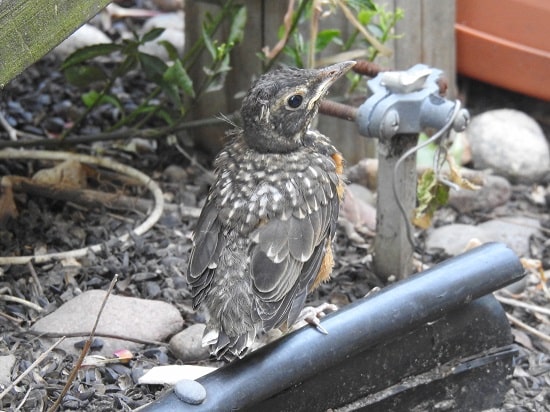
If you're worried they may be in harm's way, help them to a nearby shrub for protection so that the adults will find and continue feeding them.
The adult birds can see you a block away. So don't assume because you don't see any adult birds that there are none around.
Adult birds are listening for the juveniles and will find them if you keep them close to where you found them.
Please share this information with others who may think they're helping these young birds.
Keeping your cats indoors during the nesting season will go a long way in helping our birds. Baby Robins do not return to the nest after fledging.
Visitors to this site have submitted photos and stories of some Robins unusual nesting places that they've choosen to raise their young.
- Do Baby Robins Leave the Nest at Night?
- How Do Robins Find Worms: Listening, Feeling, Sight
- Robins Keep Nesting on My Porch
- Robins Nesting in Hanging Plants
- Helping Robins - Key Foods for Their Winter Survival
- Video of the Robins Nest Cycle
- Tips on Attracting More Robins To Your Backyard
- Watch as Baby Robins (juvenile) Leave The Nest
- Nest Shelf | Bird House for Robins and Doves

Gene Planker is the creator of Wild-Bird-Watching.com, where he shares over 50 years of backyard birding experience. His guides help readers understand the nesting, feeding, and behavior of backyard birds.

Have A Great Story and Photo About Robins Around Your Home?
We would love to read your story about Robins in your yard. REMEMBER: Photos are Required to get your story published.
To begin just enter the information asked for and your story will soon appear on this website.
What Other Visitors Have Said
Click below to see contributions from other visitors to this page...
Robins Nesting on Our Ladder 
Amy never expected robins to nest on her ladder, but they proved to be persistent parents. Explore her touching firsthand account of their journey from …
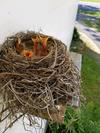
Robins Nesting on Outdoor Light Fixtures: Real Stories & Photos
Robins have a habit of nesting on porch lights, entryway fixtures, and other unusual places. These stories share the wonder and occasional challenges …
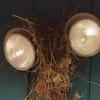
Robins Choose Security Lights to Build Nest
I want birds in my yard! I moved in my home 7 years ago.
Although my home is on a big suburban lot, it had lifeless landscaping with hard clay dirt …
Robins Keep Nesting on my Patio in Planters
Nancy shares how discovering a robin’s nest in her hanging basket and the joy of watching the birds changed her perspective on having them on her patio. …
Robin Nest On Bird Feeder
When you place a bird feeder in your yard to watch birds, you never think a Robin would build a nest on it in Spring. That's what happened with Pat's …
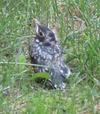
Young Robin in backyard
Lisa notices a baby robin on the ground and wonders whether she should intervene. Discovering that it is a fledgling, she watches and shares her story, …
Robin vs Oriole: Jelly Feeder Showdown
Bird watching has a way of surprising you, especially when robins start competing over grape jelly meant for orioles. Learn how Joanne handled the unexpected …
Robins Nest Patio Umbrella
When warm weather arrives, folks enjoy time on their patios or decks, but robins may take that as an invitation to nest in our umbrellas. Our readers …
How I Helped a Baby Robin I found in my Backyard that had a Deformed Beak
Rescuing a baby robin isn't always straightforward. Discover how one reader overcame the challenges and helped a young bird in need. Fledgling Robin …
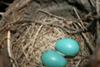
Robin's Nest On Garage Ceiling
What do you do when a pair of Robins have picked your garage to build a nest in, leave it, remove it, keep the door opened or closed? Wendell and Lorraine …
Mom Robin On The Attack
Ever wondered if robins attack people? I found out when a mother bird dive-bombed me for getting too close to her baby. What I learned, I learned the …
Robin Nesting on Wreath Hanging on Carport
A mother robin built a nest in a flower wreath on our carport, bringing the beauty of nature right to our doorstep.
Here is the story of her dedication, …
Robins, Worms, and a Lesson Learned
Grace shares a humorous tale of how robins turned her simple fishing trip into a battle for worms. What began as a routine search for bait quickly became …
Window With A View of Robins
Tammi Morgan shares her experience observing a Robin's nest. From her window, she gets a rare glimpse into nature. Read her story and share your thoughts. …
Baby Robin
Audrey finds a fledgling bird and does all the right things. She shares her short story and a lesson for all who find baby birds and want to do their …
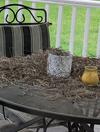
Robin Nesting on Ceiling Fan Blades Not rated yet
Below are answers and insights to Maura's questions, along with general guidance for anyone dealing with a determined robin choosing an unsafe nesting …

Aggressive mama Robin! Not rated yet
Bev discovers a robin nest on her deck railing and is excited to watch all the happenings. Unfortunately, this mom bird has other ideas, including terrorizing …
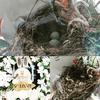
Robins Nesting On Holiday Wreaths Not rated yet
Have Robins chosen your door wreath as the perfect nest site? You're not alone. Nature has given these readers a front-row seat to some of natures best. …
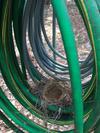
Robins Nest in Unusual Places Lights,ladders,patios Not rated yet
Robins Nest in Unusual Places
On a Sunday afternoon in May, I was puttering about the backyard when I saw a baby rabbit hop behind our garden shed. …
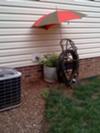
Robin Nest Fell AfterTree Cut Down Saved Here's How Not rated yet
A fallen tree left a nest of baby robins scattered and vulnerable, but Kathye refused to give up on them. Learn how she carefully relocated the nest and …
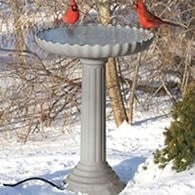

Add evergreen cover or place roosting boxes near feeders.
Birds will use them to escape wind and snow.
A simple way to help them survive harsh nights.
"What an awesome website. My little one and I enjoy playing the different bird calls and watching some of the videos, thank you!"
– Linda B., Illinois