Discover the Habits of Northern House Wrens in Your Yard
Last updated: April 26, 2025
This is an effort to distinquish between 7 species of wren. Check out The North-American-Ornithology/ for more information.
Identification: Appearance and Field Marks?
The Northern House Wren Measures only 5 inches long with a plump body and a short tail. The upper parts are unstreaked and grayish brown, the underparts are grayish-white.
Notice the faint or missing eye stripe that is common in other types of wrens such as the Carolina.

The females and juveniles look the same as the adult male, although recent fledglings are noticeably smaller.
The song of the young isn't as sure sounding as the adult males, either. For the most part, they have no prominent field marks.
If you spend some time watching these birds, you'll easily discover the extent of their territory.
The male usually has three prominent perches from which he defends his territory of 1/2 - 3/4 acres.
Call - Song
Diet and Feeding Habits
When searching for the food they visit a variety of habitats, including brushy areas, gardens, and suburban backyards.
They often forage low to the ground and in the understory of trees and shrubs, hopping and flitting quickly to catch insects.
Primarily insectivorous, their favorite foods are beetles, caterpillars, spiders, and grasshoppers.
Back at the nest, they feed their nestlings a diet of soft-bodied insects such as caterpillars, beetles, flies, and spiders.
Occasionally they give their young grasshoppers, but they often take off the hard shell beforehand.
You can supplement their diet by offering mealworms but it isn't necessary.
Mating Habits, Breeding Season, and Rituals
Spring migrants begin arriving in late March to mid-April, with males beginning territorial claims by singing from perches.
The breeding season of the House Wren begins in April as the first females begin arriving.
Easily attracted to a properly built bird house, the male arrives first in early spring and establishes his territory.
You'll know he has arrived when you hear him sing from his perches. This songster will sing from dusk to dawn during the mating season.
As you watch, the male will begin placing sticks into prospective nest holes. He may place sticks in as many as twelve different nesting sites.
When a male attracts an interested female, he leads her to each of his nest sites. The female inspects each and decides whether to pair with him.
Nest Building, Construction
After pairing, nest building begins. The female selects which nest site is suitable and starts filling the nest with more twigs.
Then she makes a small depression at the back of the cavity, which she lines with pine needles and grass for egg laying.
The whole wren nest building-construction process takes about a week.
Interesting note, spider egg sacs are part of the makeup of the nest building. In labs, these cocoons would hatch and feed on mites.
I've personally witnessed them placing spider egg sacs in the nest, however in field studies, the cocoons did not hatch.
Do They Mate for Life?
House wrens do not mate for life. They are monogamous during the first brood, but second broods may be with another partner.
Pairs may reunite more due to their loyalty to a specific territory rather than a strong attachment to a particular mate.
House Wren Nesting Habits
Egg Laying, Incubation, and fledging
Just about any cavity will suit this wren species. Common locations include bird houses and old woodpecker cavities, 4 to 30 feet above the ground.

Once the nest has been built, the female will lay one egg each day (sometimes skipping a day between eggs) until a clutch of 5 or 6 eggs is laid.
The eggs are white with roufus-reddish brown marks or spots which appear mostly on the larger end of the egg.
Only the female incubates the eggs and hatching will begin within 12 to 15 days of incubation.
During this time, the female will leave the eggs from time to time to feed. She has not abandoned the eggs.
Sometimes it may look like the male is bringing food to the female. Most likely, he is practicing his role in feeding the young.
Although occasional feedings to the female may occur, the female primarily searches out her food.
After the eggs hatch, both adults will begin feeding the young in the nest.
| Northern House Wren Nesting Timeline | |
|---|---|
| Eggs | 5 - 6 |
| Incubation | 12 - 15 days |
| Nestling Phase | 16 - 17 days |
| Broods | 1 - 2 |
The female will sleep (brood) in the nest with the chicks during this time, and the male will sleep in another cavity.
When it gets close for the young to leave the nest, you'll notice the adults are around less frequently. Fewer feedings will encourage the young to leave the nest.
Do not worry, the young leave 16-17 days after hatching. The adults will continue feeding and training them for about two more weeks.
The baby wrens do not return to sleep in the nest once they leave.
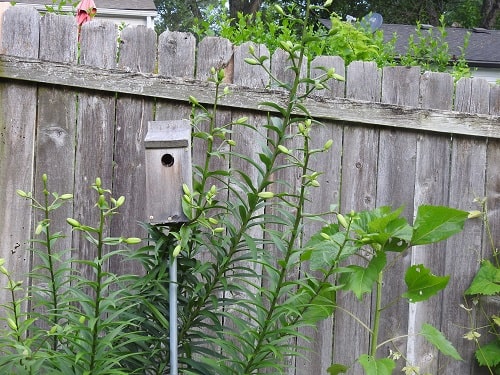
For their size, House Wrens can be very aggressive, often piercing the eggs of other cavity-nesting birds.
While it's fun to watch the House Wrens nesting habits, thought should be given as to whether you should place birdhouses for them.
If you want other cavity-nesting birds like Bluebirds, Purple Martins, or woodpeckers, you may not want them around.
Wrens will take over the nest of other birds by destroying their eggs.
While not bothered by passive human activity, it should be noted that if you get too close to the nest, you stand a good chance of being scolded.
Each season they will attempt to raise two broods. Second broods may be raised in a different location.
Second nesting is usually in Late June through July. The breeding season for House Wrens runs from March through July.
Make sure you get a photo or two.
Then Follow This link And Share Your Wren Story Here.
Read What Other Visitors Have Shared Read Stories
When Autumn arrives, these tiny birds will begin migrating southward and spend the winter in the southern states and Mexico.
Should I Clean The Birdhouse Between Broods?
Yes, it is a good practice to clean house wren nest boxes between broods to encourage other birds, including wrens, to use the birdhouse.
Cleaning the nest box helps remove any parasites, debris, or leftover nesting materials from the previous occupants, providing a cleaner and safer environment for the new occupants.
Steps to Cleaning Birdhouses
- Wait until the previous occupants have completely fledged and left the nest. Make sure there are no eggs or young birds remaining in the nest box.
- Remove the old nesting material and dispose of it in a sealed plastic bag or burn it to prevent the spread of parasites.
- Use a brush or scraper to remove any remaining debris from the nest box.
- Prepare a solution of 10% bleach (1 part bleach to 9 parts water) to disinfect the nest box. Wearing gloves, scrub the inside and outside of the box with the bleach solution, paying special attention to corners and crevices.
- Rinse the nest box thoroughly with water to remove any bleach residue.
- Allow the nest box to air dry completely before reassembling and re-hanging it.
By maintaining a clean nest box, you increase the chances of attracting wrens and other cavity-nesting birds to use the birdhouse for their next brood.
Build Your Own Wren Bird House
It doesn't take a lot to build a home for these birds, a few basic tools and a little time are all it takes.
The plan below is a very common and simple one to build. But if you'll notice, the plan calls for a 1 by 6 by 4 inches when they mean a 1 by 6 by 4 feet, not 4 inches.
Here it is.
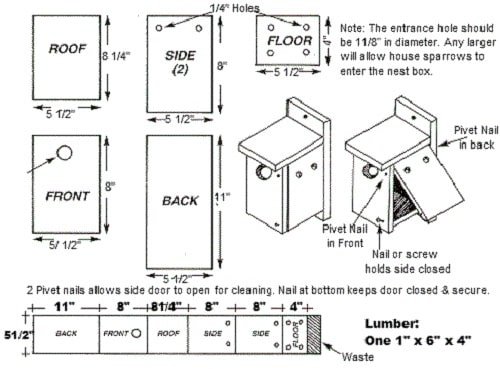
The nice thing about this particular plan is that you can build two houses with one standard 8-foot board.
Wrens build nests in multiple houses before choosing the one they like, so more may be better. Space them as far apart as possible. Front yard, backyard as an example.
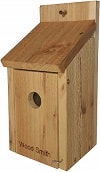
Some of you may wish to purchase a house instead of building one yourself. Here is our current recommended style of Wren birdhouse.
Northern House Wrens are friendly around humans and pets but can be aggressive toward other birds. They may attack intruders or even pierce rival bird eggs. Northern House Wrens sometimes reuse parts of old nests if they were successful but often prefer building fresh nests to avoid parasites and debris. Males may also reuse sticks from old structures. During brooding, the female stays with the young to keep them warm. Once the chicks can regulate their own temperature, the female typically stops overnight brooding. Common predators include snakes, cats, raccoons, and opossums. House Sparrows may also attack Northern House Wrens over nest sites.House Wren Frequently Asked Questions
See Also:
Wren Houses For Backyard Nesting
Watch Videos of House Wrens and Carolina Wrens

Gene Planker is the creator of Wild-Bird-Watching.com, where he shares over 50 years of backyard birding experience. His guides help readers understand the nesting, feeding, and behavior of backyard birds.

|
|
|

|
| Readers Digest Guide | Golden Guide | Your State Only | Nat-Geo Guide |

Have A Great Story About Wrens Around Your Home?
We would love to read your story and view your pictures about Wrens in Your yard.
All Submission Must Have Photos To Be Published.
To begin, just enter the information asked for and your story along with photo will soon appear on this website.
What Other Visitors Have Said
Click below to see contributions from other visitors to this page...
Backyard Wrens Feeding and Weathering Hail Storms.
Curious Carolina and Bewick's wrens have made Janet's backyard their home, nesting in unexpected places and braving Texas storms. Follow along as she …
Wren Nest Christmas Wreath
Door Wreath with Bird Nesting Inside
Frances shares a endearing story about a Wren nesting on her door wreath. As it turns out, it's a House Finch …
Newsflash! Wrenlettes Have Fledged - the Full Story
In this story, Ellen vividly describes how baby wrens take their first steps out of the nest and into the wider world. Share your thoughts at the end. …
I saved some wren nestlings.
Lori discovered that she and her husband had inadvertently brought home a nest full of Carolina Wrens. What follows is a testament to her kindness and …
Homemade Birdhouse Attracts Wrens
Building your own homemade birdhouse is a rewarding experience, but the real joy comes when you see birds nesting and raising their young in it. Silvija …
Missed Wrens Leaving Nest
Deb spent weeks enjoying the sights and sounds of House Wrens raising their young in her birdhouse. Just when she thought she would witness their first …
The Red Headed Wren
I have nesting in a bird house in my woods just to the back of my back deck a pair of Wrens.
That is not unusual, however, one of the Wrens, I suppose …
House Wren Uses Ceramic Birdhouse
Denise hangs a decorative birdhouse and waits until a family of House Wrens finally decide to build their nest inside. She shares her first-time experience …
Henry the House Wren
In the heart of summer, Jenene discovers a House Wren has taken notice of her decorative terracotta birdhouse. She shares her bird watching experience …
Wrens Steal Hanging Plant
A determined Carolina Wren claimed a hanging plant for her nest, keeping her mate busy with endless demands. Just when they thought their home was secure, …
Parents removing items
Tracy notices her wrens are carrying something white from the nest in her birdhouse. It's not eggshells. She ask, "what is it?" We have answers. This …
Carolina Wrens Make Nest In Garage Inside Box
Two Carolina wrens decided to make their home in our garage this spring.
At first attempt, the male wren built a nest in an old hat sitting on the …
Wrens Nesting In Mailbox
What do you do when you find wrens nesting in your mailbox? Libby shares her story and what she did after finding a pair building a nest inside her's. …
Wren nest in shamrock plant
A Carolina Wren nested in a plant on Karen's porch, giving her a front-row seat to the wonders of nature, from egg-laying to fledging. She shares her …
Helping a Wren Take Flight
A hesitant baby wren, a gentle nudge, and a joyful first flight. This is the story of a wren's incredible fledging experience, straight from my backyard. …
Wren Nesting Indoors
Linda discovered a wren building a nest inside her house! She shares how she was able to move the bird nest outside without abandonment. Comments?
…
Wren Nesting in Door Wreath
What happens when Carolina Wrens build a nest on a busy front door wreath? Janice's firsthand account reveals the surprising ways these tiny birds adapt …
Sparrow kills House Wren
House Sparrows are a non-native, invasive species known to take over nesting sites. In this case, a male House Sparrow harassed a nesting pair of House …
Wrens Nesting Under Propane Tank Lids – Stories and Photos
Wrens nesting under propane tank lids? It’s more common than you think! Here are two firsthand accounts of unexpected bird nests. Wren Nest Discovery …
Cactus Wren saying Happy Valentines day
The Cactus Wren can be one of the most annoying birds to have around. They are destructive, mischievous, and loud! But they're still one of my favorite …
Wren Nesting In Birdfeeder
A persistent House Wren has decide "come what may," It will not be detoured building its nest inside a bird feeder. Read the story and share your thoughts. …
Gas Lamp Wren Brood
Glenda shares how a wren decide that a non-operational gas lamp would make a perfect birdhouse. Her husband was there to describe to her the fledging …
Wrens Abandoned Nest
PLEASE HELP! I am not sure what to do, if anything.
I have a small bird house in the lilac tree outside my bedroom window.
I have been enjoying …
Wren In Topsy Turvy Tomato Planter
Carolina Wren Nest in Topsy Turvy
One day my husband went to water his tomato plant that was hanging off our front porch.
He was greatly surprised …
Wren Inside My Shed?
Inside the shed that Lisa's husband is nearly finished building, she has discovered a Carolina Wren nest—complete with eggs! Read her story and share …
A cactus Wren's SNOW experience
I have Cactus Wrens all over the place here in the high desert Mtns.
I used to get so frustrated with these little buggars, tearing up my patio furniture, …
Wren Rescue Story
A tiny Carolina wren chick fell from its nest, but a creative solution helped reunite it with its parents. Read this heartwarming rescue story.
This …
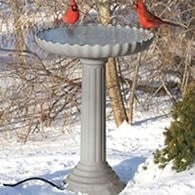
Add evergreen cover or place roosting boxes near feeders.
Birds will use them to escape wind and snow.
A simple way to help them survive harsh nights.

"What an awesome website. My little one and I enjoy playing the different bird calls and watching some of the videos, thank you!"
– Linda B., Illinois