Hummingbird Facts How Many Wings Beats, Feathers Heartbeats
In the fascinating world of birds, hummingbirds stand out as vibrant and captivating creatures, with a rich history. Let's uncover some interesting and fun hummingbird facts and delve into some history and habits of these birds.
Dating back to the Taino Native Americans. These tiny warriors, known as Colibir, held a special place in Taino culture as the spreaders of life on Earth.
The Taino Connection
The oldest historical mention of hummingbirds, intertwined with the beliefs of the Taino Native Americans during the time of Columbus.
The Taino regarded hummingbirds as peaceful warriors, defending their territory with the heart of an eagle.
While the exact duration of their presence in America remains unknown, hummingbirds have delighted bird watchers for centuries with their quick dashes and brilliant feathers.
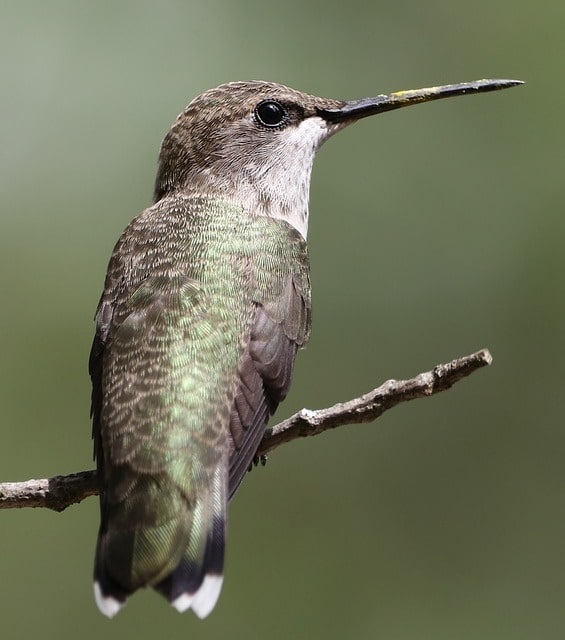
Where Do Hummingbirds Get Their Color?
East of the Rockies, the Ruby-throated Hummingbird is the most common hummingbird and recognized for its iridescent feathering, and dazzling ruby-red throat.
The color though, is not all it seems.
Hummingbirds get their unusual coloring from the fact that not all feathers are pigmented, or colored.
In the duller colors, including the Rufous Hummingbird, the brown hue is actual pigment in the feather structure.
In the Ruby-throated species, Archilochus colubris, light refracting through the feather segments, breaking it up much like a prism would.
Only certain levels of color will be seen by the human eye, and that color will change with every movement of the feather, or angle of the light striking it.
This is one of the features that makes them so charming to watch as they flit around a garden or feeder.
How Fast Are Hummingbirds?
Hummingbirds are very fast, traveling at an average 25 miles per hour, with wingbeats of anywhere from 10-15 per second in the Giant Hummingbird, up to 80 per second by the Amethyst Woodstar.
The ruby-throated hummingbird falls into the middle range, at about 53 beats per second.
To sustain such rapid and prolonged activity, the hummingbird's heart must beat accordingly.
For birds that are hot, or sleepy, that can be as low as 50-180 beats per minute, but a heart rate of an amazing 1360 beats per minute has been recorded in a Blue-Throated Hummingbird.
How Much Do They Eat?
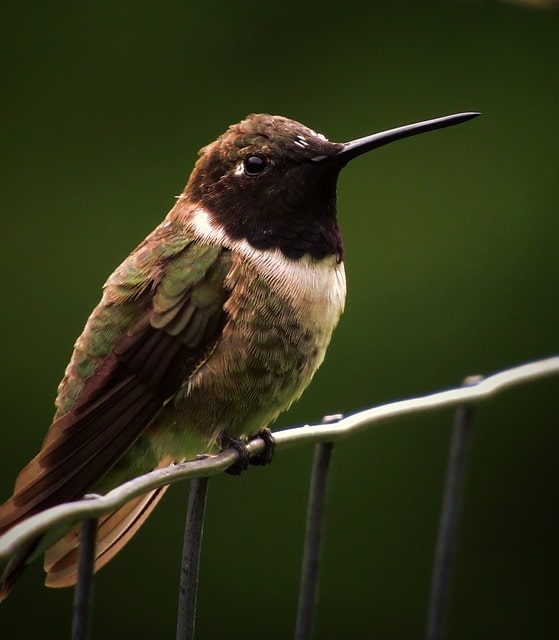
All this activity requires a humming bird to eat almost continually, to fuel the activity that will maintain its 105-109F body heat.
That means dining as many as 15 times an hour, on high-energy food.
In volume, they consume up to eight times their body weight a day.
But reduce the nectar to a solid by eliminating the water, and it would amount to their own bodyweight.
A hummingbird can starve to death in as little as two hours, if still active.
That makes rescue of birds trapped in garages or other enclosed areas, imperative within a short time.
At night, their "thermal generators" shut down as they rest, and allow their body temperature to drop, so that less energy is used up while they sleep.
If you enjoy watching these delightful little birds, and are also an enthusiastic gardener, why not plant clumps of flowers or bushes, to bring them into your yard?
Hummingbirds are creatures of habit, and will develop their own paths to food, checking them frequently and on a daily basis.
Once they find out you have goodies, they'll return over and over.
Other hummingbirds will follow, and you may then get to see hummingbird behavior at its worst, as they dive at each other to protect their food sources.
Creating a Hummingbird-Friendly Haven
Good choices of food producing plants for hummingbirds include such trees or bushes as Azaleas, Mimosa, Weigela, Cape Honeysuckle and Flowering Quince.
Another semi-permanent attraction is a perennial bed with Bee Balm, Columbine, Lupine, Coral Bells and Canna.
You can also plant a wide range of annuals like Fuschia, Impatiens, Petunias and Firespike, but consider growing some of your own plants from seed, as many flowers that are nursery grown, tend not to have as much nectar.
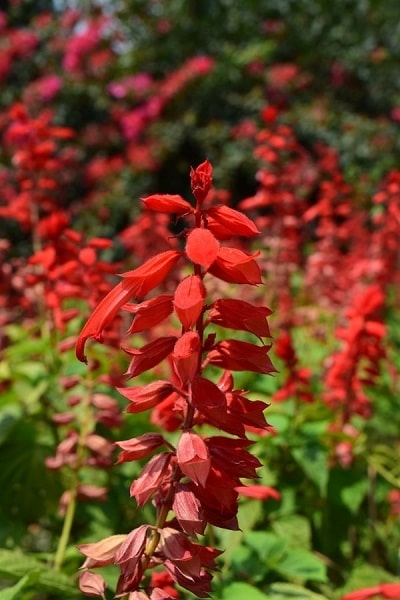
Hummingbirds will be overjoyed to discover this bonanza of blooms, and the tiny bugs that constitute the protein source of their diet.
To make sure you enjoy these little feathered friends for the whole season, hang some hummingbird feeders around your patio or gardens.
But make sure there is a bit of distance between them, to avoid the squabbles, which can be quite a sight!
Because hummingbirds are attracted to red flowers, you'll find many of the hummingbird feeders available, are also colored red.
This isn't an absolute necessity, but it can be a bright spot in your garden.
And the feeders come in all kinds of charming shapes from a hanging bunch of grapes, to a giant strawberry.
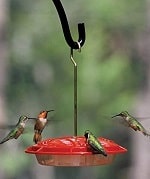
Commercial powdered "food" formula is available, but you can easily make your own by combining one part sugar to four parts water and storing in the fridge.
Never use honey, which can ferment, or red dye, which can be harmful to the birds.
Only fill your hummingbird feeders to the one-third or halfway mark, as it would take many birds to empty the contents, and the feeders will need cleaning every few days to prevent the occurrence of mold.
Wash in mild dish detergent, with no more than 10% bleach, and rinse several times.
If you have mold inside the feeder and can't reach it with a bottle brush, put some sand in with the water, and swish that back and forth, until the mold is rubbed off.
Quick Hummingbird Fun Facts
- The hummingbird is so small, that an insect, the Praying Mantis is its natural enemy.
- They are the only bird that can hover, and fly backwards as well as straight up or down
- Hummingbirds can't walk
- The average lifespan of a hummingbird is 3-4 years, although one specimen was caught in 1976 in Colorado, banded, and captured again in 1987
Do Hummingbirds Migrate on Geese Backs?
Often the question is asked, "do hummingbirds ride on the backs of geese during migration?" While this may sound like a reasonable solution, it is not true.
Hummingbirds that migrate, do so on their own wing power.
Have an intriguing hummingbird story or a captivating picture to share? Join our community and contribute your experiences with these marvelous birds. To share, start here: Share My Hummingbird Story
Read What Others Have Shared
When Do Hummingbirds Leave For Winter Migrate South?
Leaving your feeders up as long as they are still coming will help them fuel up before their 600 mile journey across the Gulf of Mexico.
A hard date isn't possible since there are several factors that determine migration timing. Ruby-throated hummingbirds are usually what people are asking about.
The best advice I can give is to leave feeders up an additional two weeks past the last time you saw any feeding.
A good resource for tracking migration of the Ruby-throated and Rufous Hummingbirds is located at Hummingbird Central
Resources For More Information
The How To's Of Attracting Hummingbirds
Information On Migration and Hummingbirds

Please Use The Contact Form For Questions
Have A Great Story and Photo About Hummingbirds In Your Backyard
Do you have a great story and photo about Hummingbirds nesting or feeding in your backyard? Why Not Share it! Our Visitors will love reading and viewing your stories and pics. It's Easy. Just fill in the blanks below and upload your photos.
All Stories MUST Have Photo and be at least 4 or more paragraphs to be published Let's Get Started!
What Other Visitors Have Said
Read stories from other visitors.
Magical Meanings of Seeing a Hummingbird
Has a hummingbird sighting ever brought you comfort or inspiration? If you’ve had a meaningful encounter, tell us about it in the comments below. What …
Hummingbird Nest on Patio Lights
I have always loved hummingbirds , so having one build a nest on my patio is a real treat!
I have noticed a lot of hummingbirds around my Scottsdale …
Do Hummingbirds Communicate with Us?
Jason notice that his hummingbirds seem to be alerting him when his feeders were low. He asked, are they communicating with us? Other readers chime in. …
Hummingbird Feeder Raiders
Mike was caught off guard when he found some large birds getting the hummingbird nectar he made for the tiny flying jewels. He ask help in identifying …
Costa's Hummingbird - Purple Beauty of the High Desert
Cindy gives us a brief outline of a hummingbird many of us don't get to see, the Costa's Hummingbird. She shares her first-hand experience and personal …
Hummingbird feeders and Orioles!
There Are Orioles at Our Hummingbird Feeder
Its amazing how many birds our little Hummingbird feeders will actually attract. Here are some …
BEES! Invading Feeders, Ideas?
If you feed hummingbirds, sooner or later the bees and wasp are going to find your feeder. Cindy asks if anything can be done, and our readers are here …
Hummingbird Feeders and Other Birds
Just what birds, bats, or others have you seen raid your hummingbird feeders? Read these 3 stories then comment below. I ran across this picture the other …
What A Sight !! Woody on the Hummingbird Feeder
Can you believe this? Only nature at its best can describe this woodpecker drinking the sugar water (nectar) from the hummingbird feeder.
I kept …
Move Over Hummers! Its the Verdin!
I cannot believe the different types of birds that will actually drink up the nectar from a Hummingbird feeder !
I was outside one day and heard …
Birds That Feed At Hummingbird Feeders
Did you know hummingbird feeders can become a hotspot for other bird species? Cindy was shocked to find a much larger bird perched on hers and couldn’t …
Hummingbirds In The Snow and Resue Story
Hummingbirds sometimes face unexpected hardships, from harsh weather to life-threatening accidents. These three heartwarming stories highlight the kindness …
Hummingbirds Have Personalities
Cindy asserts that hummingbirds have personalities and shares her thoughts about these tiny birds and what she feels is a blessing to have them around. …
Is it Hummingbird Play or Aggression When Chasing Each Other
Playing - Fighting - What and Why?
I have witnessed an odd behavior, actually almost comical rather than odd, amongst the 18 or so humming …