Complete Guide to House Finch Mating and Nesting Behaviors
Updated May 29, 2025
In this guide I'll cover egg laying, diet, nest building, and appearance.
Initially, the House Finch was a bird of the west, but because of its rosy breast and very melodic song, people wanted to own one.
To supply demand, pet stores in the eastern part of the US were importing this small bird from its native home in California.
Once a crackdown on this illegal trade went into effect, shop owners were quick to release the birds into the wild.
Fortunately, the House Finch adapted well and is now a common bird that nests in almost every state (Citation: Dispersal, Population Growth).
Description - Size - Field Marks
I frequently receive emails asking, "What is this brown bird with a red head?" The most likely answer is a male House Finch.
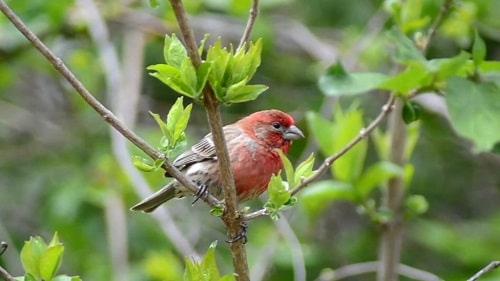
The male house finch is about 5 1/2 inches long from beak tip to end of tail, with red on the head, upper breast, and flanks. In some regions, the color red may be replaced with yellow or orange.
This difference in coloration is most likely because of the differences in regional diets. Many people think they are seeing a Red-headed Sparrow Bird.
While adult females look similar to sparrows, there is no such thing as a Red Headed Sparrow or Red Headed Wren. The House Finch and House Sparrow differences are stark, once they've been pointed out to you.
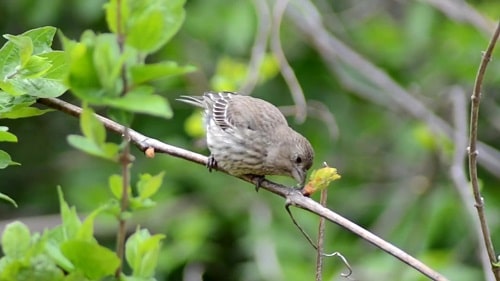
The female has a uniformly brown-streaked head with broad brown streaking on the breast and belly. The under-tail coverts are unstreaked.
Mating Habits - Do House Finches Mate For Life
The term "mate for life" is a bit of a stretch with House Finches, although some pairs stick together through winter, many switch partners every season or even during the same season.
An interesting note is that pairs that stay together through winter nest earlier than those that don't.
Courtship Behavior
New pair formations takes place in January - March depending on location while small flocks are still feeding together.
During courtship, females solicit food from prospective mates. The males either mock feed or regurgitate food into the female's mouth.
One behavior worth noting is that the males will defend the female they're mated with and not defend any territory. Most other birds try to defend both.
Nesting Habits: What the Nest Looks Like
The nest building season for House Finches can begin as early as March, with egg laying by late March. Here in northeast Kansas my finches lay eggs around mid-April.
Second and subsequent nesting can go into August, depending on the success of broods. Usually no more than 3 broods per season. Two clutches are what I see most years.
Interesting to note, House Finches may build 4 to 6 nest in a season.
The femal House Finch builds a cup-shaped nest made of twigs, grasses, and leaves. Below is a typical nest showing one egg inside.
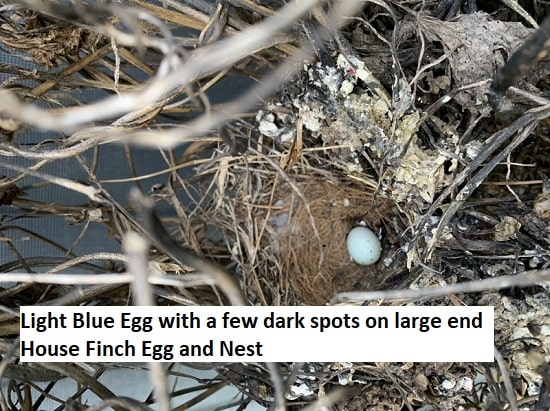
Several nests may be built before the the actual site is selected. Although bird watchers may see the male with nesting material, it's the female that builds the actual nest.
| House Finch Nesting Habits | |
|---|---|
| Eggs | 2 - 6 |
| Incubation | 12 - 14 days |
| Nestling Phase | 11- 17 days |
| Broods | 1 - 3 |
Where Do They Nest?
House finches make nests in a range of places, hanging plants, door wreaths, and handmade ledges placed under house eaves. Favorite trees include, spruce and pine.
We attached a man-made wooden Barn Swallow nest under the eave of our house and attract a pair every year. See video below.
The nest is located between 5 and 10 feet above the ground.
The female lays 2 to 6 bluish eggs that are finely speckling. Incubation is done by the female and the eggs will hatch in 12 to 14 days.
The baby finches stay in the nest for 11 to 17 days after they hatch. Once they leave, the male will continue feeding while the female begins a new nest.
House Finches can raise 3 broods each season. The most common is 2 broods per year.
They may either reuse their existing nest, occupy a nest built by another finch, or construct a new one using materials from the old nest.
During incubation and for about five days after the young have hatched, the male will feed the female in the nest.
He does this by regurgitating the seed into the female's beak. The female regurgitates the food to the nestlings.
After the young have fledged, the parents continue to feed the young.
Some females may find a new mate and raise another brood while the first male continues to feed the young.
Some females will begin a second nest just before the first clutch fledges.
The Brown-headed Cowbird often lays its eggs in House Finches nests. When this happens, the eggs may be removed by the Finches or the nest may be abandoned.

Feeding Habits - What is the Best Seed for wild House Finches to Eat
Unlike many other birds who switch their eating habits in spring and summer, Finches are vegetarians all year.
Their diet consists of seeds, fruit, and tree buds. Sometimes causing problems for apple growers by damaging the fruit.
Even during the breeding season, these birds regurgitate seeds to their young.
By Keeping Squirrels Off Feeders?
Learn More!
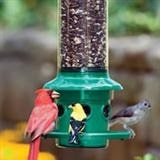
House Finches forage both on the ground and in trees. Bird watchers can easily attract this bird to feeders by offering Black-oil Sunflower, safflower, and nyjer seeds.
Do House Finches Migrate?
While some northern populations may move short distances southward during particularly severe winters, the majority of house finches you see at your winter feeders are likely the same local residents that were there all summer.The confusion about house finch migration often stems from their increased visibility at bird feeders during winter.
As natural food sources like seeds and berries become scarce in colder months, house finches visit backyard feeders more frequently, making them appear more numerous.
Song - Calls
The song of the House Finch is a pleasant, warbling melody comprising of a series of varied notes.
It is delivered by the males during the breeding season to attract mates and establish territories.
Each male has its own unique song, although there can be regional variations as well.
They also have several calls that serve different purposes.
Flight Call: A high-pitched "cheep" or "chirp" sound used during flight or when in motion.
It helps individuals stay in contact with each other while in flight or when moving between feeding areas.
Contact Call: A soft, rapid "chirp" or "tew" sound used for maintaining contact with other finches.
It is often heard when individuals are foraging together or when they want to locate each other within a flock.
Why Attract Finches to Your Yard
As seed eaters, it's beneficial to have these birds around your yard. In summer they can be a real help in keeping weeds seeds down.
Seeds and bird feeders are the starting point. Like most birds, they need a reliable water source for drinking and bathing.
Birdbaths, fountains, or shallow dishes with fresh water can be enticing for them.
Long-term, think about the vegetation around your property. House Finches are drawn to areas with dense shrubs, trees, and other vegetation.
These provide shelter, nesting sites, and a sense of security. Want some tips on how to Attract More Finches to Your Feeders?
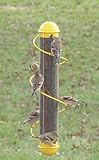
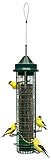
I recommend using a squirrel-resistant feeder if you're offering sunflower seed, as squirrels will quickly devour it before birds get a chance. For nyjer seed, check out the feeders below.
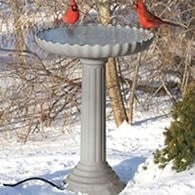
In winter,I use a de-icer in my birdbath in order to provide water in winter.
Is There a Special Meaning When You See a House Finch?
Not every sighting of every bird has a particular meaning. These birds are pretty common and do not hold any symbolic meaning in most cultures.
However, observing a House Finch in your surroundings can be seen as a positive sign, indicating the presence of nature and wildlife in your area.
Their vibrant colors and cheerful songs can bring joy and a sense of tranquility.
Furthermore, their presence may serve as a reminder of the interconnectedness of ecosystems and the importance of conservation efforts to preserve biodiversity.
How Long Do They Live
The average lifespan of the House Finch is around 5 years. The oldest known male and female were 12 years and 10 years, respectively.



Gene Planker is the creator of Wild-Bird-Watching.com, where he shares over 50 years of backyard birding experience. His guides help readers understand the nesting, feeding, and behavior of backyard birds.

Add evergreen cover or place roosting boxes near feeders.
Birds will use them to escape wind and snow.
A simple way to help them survive harsh nights.
"What an awesome website. My little one and I enjoy playing the different bird calls and watching some of the videos, thank you!"
– Linda B., Illinois