Why Do Crows Attack People in Spring
This behavior is temporary and tied directly to breeding season. Most swooping incidents are warning passes meant to protect vulnerable chicks.
Understanding what is happening biologically and socially helps remove much of the mystery.
Nesting Season Changes Everything
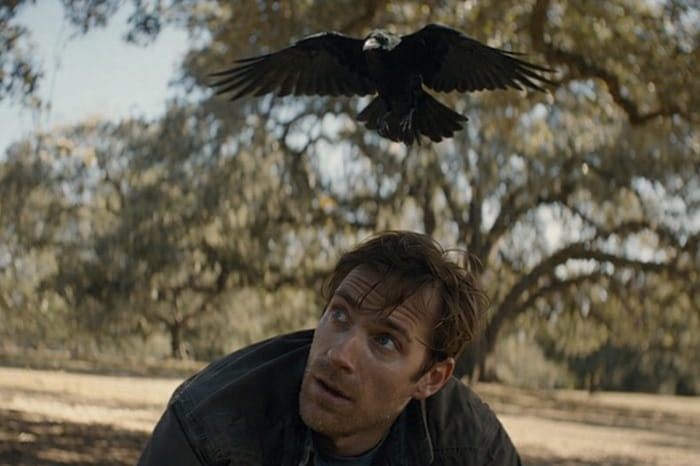
American Crows begin breeding in early spring. In many parts of the United States, nesting begins in March or April, though southern birds may start slightly earlier.
Once eggs are laid, the pair becomes highly protective of the nest site. During incubation, the female remains on the nest while the male stands guard nearby.
Both birds become more alert to disturbances in their immediate area.
This defensive instinct intensifies once the eggs hatch.
But the stage that causes the most human conflict is not when eggs are in the nest. It is when young birds leave it.
The Fledgling Stage: The Most Vulnerable Time
After about a month in the nest, young crows fledge. At this stage, they can hop, flutter, and perch low in shrubs or on the ground, but they are not strong flyers yet.
For several days, sometimes longer, these fledglings remain in the territory while continuing to be fed by their parents.
To a crow parent, this is the most dangerous period. A grounded fledgling is vulnerable to cats, dogs, hawks, and people who unknowingly approach too closely.
If a person repeatedly walks through that area, even without noticing the young bird, adult crows may respond defensively.
This is when swooping behavior typically begins.
What a Crow "Attack" Really Is
Most spring "attacks" are warning displays. A crow may:
- Fly low and fast over a person's head
- Brush hair lightly without making forceful contact
- Land nearby while calling loudly
- Circle overhead while giving sharp alarm calls
Actual physical strikes are rare. Most contact is glancing and designed to startle rather than injure.
The goal is simple: drive the perceived threat away from the young bird.
Once the person leaves the immediate area, the behavior usually stops.
Why Some People Are Targeted and Others Are Not
One of the most puzzling aspects of this behavior is that it often appears selective.
In some neighborhoods, only one person is swooped at, while others walk through the same area undisturbed.
Crows are capable of recognizing individual human faces. If a specific person has previously approached a nest or fledgling, the adult birds may associate that individual with risk.
Even repeated daily walking along the same path can be enough for crows to classify someone as a consistent presence near the nest.
Once labeled a threat, that person may receive defensive swoops for the duration of the nesting cycle.
This does not mean the crow "hates" the individual. It means the bird has learned to respond cautiously to a familiar face in a sensitive area.
Territory Boundaries Matter
Crow aggression in spring is highly localized.
The defensive zone may extend only 50 to 100 feet from the nest or from a fledgling's location. Step outside that invisible boundary, and the behavior often stops immediately.
This is why some people experience repeated swooping at the same corner of a sidewalk but nowhere else.
The nest itself is usually high in a tree and not easily visible from the ground. Fledglings may be hidden in shrubs, under ornamental trees, or along fence lines.
From a crow's perspective, the territory is clearly defined.
From a human perspective, it is often invisible.
Cooperative Defense: More Than Two Birds
American Crows sometimes engage in cooperative breeding. Young from previous years may remain near their parents and assist with defense and feeding of new broods.
During nesting season, multiple birds may respond to a perceived threat.
This can make the situation feel more intense than it actually is. Loud calling from several crows at once can give the impression of widespread aggression.
In reality, it is a coordinated family defense system focused on a very small area.
How Long Does Spring Aggression Last?
The good news is that this behavior is temporary.
Aggressive swooping usually lasts two to three weeks, corresponding with the period when fledglings are most vulnerable.
Once the young birds gain strong flight ability and disperse farther from the nest area, defensive intensity drops rapidly.
By early summer, the same yard or sidewalk that felt hostile in April may feel completely calm.
Crow aggression in spring is seasonal, not permanent.
Urban Versus Rural Differences
In urban and suburban areas, human presence is constant. Crows nesting in these environments must balance tolerance with protection.
Urban crows may be more accustomed to people but still defend actively when fledglings are on the ground.
In rural areas, territories may be larger, and defensive behavior may be directed more often at predators than at people.
The pattern remains the same. Defense is strongest when young birds are least capable of escape.
Why Retaliation Makes Things Worse
When swooped at, some people respond by yelling, throwing objects, or attempting to scare the birds away.
From the crow's perspective, this confirms that the person is dangerous.
Escalating behavior can intensify defensive responses and prolong the encounter.
Crows are intelligent and observant. Calm, steady movement through the area is far less likely to trigger repeated swoops than sudden or aggressive gestures.
Practical Steps If a Crow Is Swooping
If you encounter defensive crows in spring:
- Avoid the immediate area if possible for a few weeks
- Wear a hat, or carry an open umbrella, or slip on a ski mask when passing through
- Walk steadily rather than running
- Do not attempt to approach or photograph fledglings closely
Simple adjustments often eliminate repeated encounters.
Most importantly, recognize that the behavior is protective rather than hostile.
Why Understanding Changes Perspective
Seen from a distance, spring aggression can feel unsettling.
Seen from the bird's perspective, it is evidence of strong parental investment and social coordination.
Crows form long term pair bonds. They defend territories year after year. In some cases, family groups cooperate to raise young together.
A brief defensive swoop in April is part of that larger cycle.
Once nesting season passes, the same birds return to foraging, social gatherings, and the quieter rhythms of summer life.
The Bigger Picture
Crow aggression in spring is not random and not permanent. It is a predictable response tied to reproduction and the vulnerable fledgling stage.
If you experience it, you are almost certainly walking within a short distance of a nest or a young bird learning to fly.
Give the area a little space, allow a few weeks to pass, and the behavior will resolve on its own.
Understanding what is happening makes it easier to interpret what you see.
In the end, spring swooping is less about attack and more about protection.
Related Reading:
 Readers Digest Guide
|
 Golden Guide
|
 Your State Only
|
 Nat-Geo Guide
|

Gene Planker is the creator of Wild-Bird-Watching.com, where he shares over 50 years of backyard birding experience. His guides help readers understand the nesting, feeding, and behavior of backyard birds.



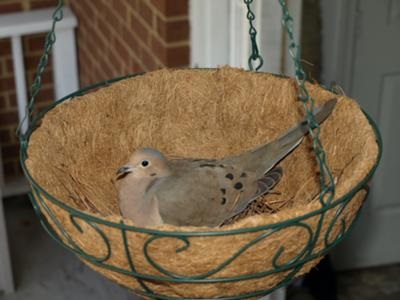

Before trimming shrubs or mowing, check for active nests. Many birds begin nesting earlier than expected, and a quick look can prevent accidentally disturbing a brood.


"What an awesome website. My little one and I enjoy playing the different bird calls and watching some of the videos, thank you!"
– Linda B., Illinois