Do Gray Squirrels Damage Trees? (What's Normal and What's Not)
The key is knowing when it's harmless and when it might become a problem.
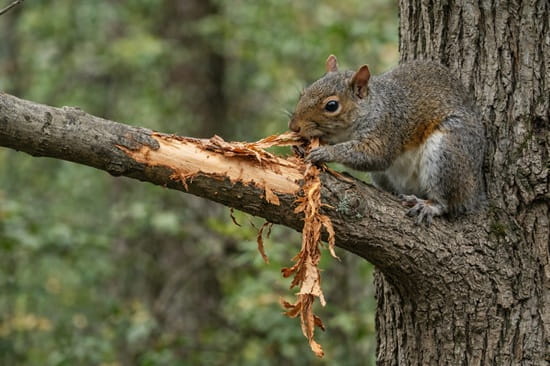
The Eastern Gray Squirrel spends much of its life in trees, so it's not surprising that its daily habits sometimes leave visible marks behind.
Most of the time, the damage people notice looks worse than it actually is.
Small branches on the ground, bits of bark missing, or chewed tips are all part of how squirrels feed, move, and build nests.
Healthy trees usually tolerate this kind of activity without any lasting effects.
The Most Common Tree Damage You'll See
One of the first things people notice is bark being peeled from smaller branches, especially in spring.
In some cases, squirrels are feeding on the soft inner layer beneath the bark. In others, they are actually collecting those long strips to use in nest construction.
If you've seen bark removed in long, flexible pieces and carried away, that behavior is explained in more detail here: Why squirrels strip bark from trees and how they use it in nests?
Another common sight is a scattering of small twigs on the ground.
This often shows up in late summer or fall and can look like something is damaging the tree.
In reality, squirrels are usually feeding on buds or trimming small branches as they move and forage. It's messy, but rarely harmful.
In early spring, they may also feed on buds and tender new growth.
This can make a tree look a little thin for a short time, but as the season progresses, new leaves quickly replace what was lost.
When Should You Be Concerned?
Most squirrel activity falls into the "normal" category, but there are a few situations where it's worth paying closer attention.
If large sections of bark are removed from the trunk, or if the same tree is repeatedly targeted over time, that can begin to stress the tree.
This kind of damage is much less common than the small-branch activity most people see, but it's the type that can interfere with how the tree moves nutrients.
For the average yard, though, what you're seeing is usually limited to outer growth and doesn't affect the overall health of the tree.
Why Trees Usually Recover
Trees are built to handle minor damage. Small branches are often expendable, and new growth replaces them quickly.
Even when bark is stripped from thinner branches, the tree can seal over the area and continue growing.
As long as the main trunk and larger limbs remain intact, recovery is usually quick and complete.
Part of a Larger Pattern
What looks like damage is often just a byproduct of how squirrels live.
They cut twigs while feeding, strip bark when materials are needed, and move constantly through the canopy.
All of this ties back to nesting, feeding, and raising young.
If you want to see how these behaviors fit into the full nesting cycle,you can explore: Gray Squirrel Nesting and Mating Habits
FAQ: Squirrels and Tree Damage
Do squirrels damage healthy trees?
Most of the time, no. The activity you see is usually minor and does not affect the long-term health of a healthy tree.
Why are squirrels stripping bark from branches?
They may be feeding on the inner bark or collecting material for nest building, especially in spring.
Is twig clipping harmful to trees?
It may look concerning, but trees typically recover easily from the loss of small branches.
Should I try to stop squirrels from climbing my trees?
In most cases, it isn't necessary. Their behavior is natural and rarely leads to serious damage.

Gene Planker is the creator of Wild-Bird-Watching.com, where he shares over 50 years of backyard birding experience. His guides help readers understand the nesting, feeding, and behavior of backyard birds.


Before trimming shrubs or mowing, check for active nests. Many birds begin nesting earlier than expected, and a quick look can prevent accidentally disturbing a brood.

"What an awesome website. My little one and I enjoy playing the different bird calls and watching some of the videos, thank you!"
– Linda B., Illinois