Building Birdhouses Chart For Hole Size, Floor, and Material Type
Introduction
While it's possible to get birds to nest in any nest box, you'll have greater success attracting the birds you want by crafting yours using the chart below.
With so much competition from House Sparrows and Starlings, it's important that we help by building properly constructed and monitored nest boxes where we can.
Some of the birds that will use your creations are Bluebirds, Wrens, Chickadees, Woodpeckers, and more than 50 others.
Protect Entrance Hole
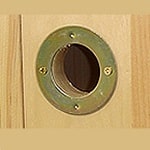
After you build your birdhouses, ensure you don't let the squirrels and woodpeckers damage all your hard work. A metal portal protector will stop this damage before it starts.
Place these around the openings so that they stay the size you want. Available in 1 1/2 inch - 1 1/4 - 1 1/8 inch and 1 9/16 to cover most species of birds. Just click the photo to learn more.
Birdhouse Size Chart
| BIRD SPECIES | FLOOR SIZE | BOX HEIGHT | Hole From Floor | HOLE SIZE | HEIGHT ABOVE GROUND |
|---|---|---|---|---|---|
| American Robin* | 7" x 8" | 8" | ---- | ---- | 6-15' |
| Barn Owls | 10" x 18" | 15-18" | 4" | 6" | 12-18' |
| Bluebirds | 5" x 5" | 8-12" | 6-10" | 1 1/2 to 1 9/16" | 4-6' |
| Chickadees | 4" x 4" | 8-10" | 6-8" | 1 1/8" | 4-15' |
| Northern Flicker | 7" x 7" | 16-18" | 14-16" | 2 1/2" | 6-20' |
| Flycatchers | 6" x 6" | 8-12" | 6-10" | 1 1/2 to 1 1/4" | 5-15' |
| House Finch | 6" x 6" | 6" | 4" | 2" | 8-12' |
| House Sparrows | 4" x 4" to 5" x 5" | 9-12" | 6-7" | 1 3/16 - 2" | ---- |
| Nuthatches | 4" x 4" | 8-10" | 6-8" | 1 1/4 to 1 3/8" | 5-15' |
| Osprey | 48" x 48" Platform | ---- | ---- | ---- | ---- |
| Phoebes | 6" x 6" | 6" | ---- | ---- | 8-12' |
| Purple Martins | 7" x 11" | 6" | 1-2" | 1 3/4" - 2 1/4" | 10-15' |
| Downy Woodpecker | 4" x 4" | 8-10" | 6-8" | 1 1/4" | 5-15' |
| Hairy Woodpecker | 6" x 6" | 12-15" | 9-12" | 1 1/2" | 8-20' |
| Pileated Woodpecker | 8" x 8" | 16-24" | 12-20" | 3x4" | 15-25' |
| Red-Bellied Woodpecker | 6" x 6" | 12-15" | 9-12" | 2 1/2" | 10-20' |
| Red-Headed Woodpecker | 6" x 6" | 12-15" | 9-12" | 2" | 10-20' |
| Red-Tailed Hawk and Great Horned Owl | 24" x 24" Platform | ---- | ---- | ---- | ---- |
| Screech Owls and Kestrels | 8" x 8" | 12-15" | 9-12" | 3" | 10-30' |
| Barn Swallows* | 6" x 6" | 6" | ---- | ---- | 8-12' |
| Violet-Green and Tree Swallows | 5" x 5" | 6-8" | 4-6" | 1 1/2" | 5-15' |
| Titmice | 4" x 4" | 10-12" | 6-10" | 1 1/4" | 5-15' |
| Prothonotary Warbler | 5" x 5" | 6" | 4-5" | 1 1/8" | 4-8' |
| Wood Ducks | 10" x 18" | 10-24" | 12-16" | 4" | 10-20' |
| Wrens | 4" x 4" | 6-8" | 4-6" | to 1 1/2" | 5-10' |
| Yellow-Bellied Sapsucker | 5" x 5" | 12-15" | 9-12" | 1 1/2" | 10-20' |
| *Robins prefer a nesting shelf. See one here. | |||||
Before You Begin Building
Some things to keep in mind before starting your build are: Choose the right material, birds in the wild nest in old trees, fence posts, or utility poles.
Wood is the preferred material for building nesting boxes. So what type of wood should you use?
Ideally, a naturally decay-resistant wood such as cedar, redwood, or a good grade of exterior plywood is best.
Wood should be 3/4" thick, anything less will allow heat to build up, which is detrimental to young birds.
Avoid using paint, especially dark paint, as dark paint absorbs heat. Besides, a natural-looking house will be more attractive to the birds.
Make sure that you provide proper drainage to keep the nest and its contents dry.
You can do this with an ample overhang on the roof and 1/4" drain holes bored in each corner of the floor.
Ventilation can be provided by drilling 1/2" vent holes at the top of each side or with a ventilation gap between the roof and sides.
The hole size is the most critical when building bird boxes. If it's too small, your chosen bird species may not be able to enter the house.
If it's too large, it could allow bigger, more aggressive species such as starlings or House sparrows to use the houses.
Predator guards are another necessary feature. These can be as simple as an additional 2 x 2-inch block drilled to the same size as the entry hole to add more "depth" to the face of the box.
This makes it more difficult for a predator to reach inside the nest. You also can drill the entry hole at an angle to deflect a predator's reach up and away from the nest.
NEVER add a perch when making bird houses. Birds don't need it, but it could be an advantage for predators.
Once the young are ready to fledge, having an easy exit is necessary. This can be done in several ways.
You can place the rough side of the wood to the inside of the house, you can horizontally score the inside of the front below the entrance hole, or add a piece of screening material below the hole and finally, you can add pieces of wood below the hole to act as a ladder for the young birds.
Any of these suggestions offer the nestlings a way to climb up to the entrance hole when it's time to fly.
You also must provide easy access for cleanout. You can do this simply by hinging the front panel or one of the side panels or by having a removable floor or roof.
This is a hobby that can be fun and rewarding. Consider giving them as gifts to friends, family, and schools.
Even if they are not now a birdwatcher, they might become one once they see a family of birds nesting in the house that you built.
Consider This
In addition to building traditional nesting boxes, consider making or purchasing a Nesting Shelf. Some birds, such as the American Robin, Eastern Phoebe, Barn swallow, and Mourning Dove, can be attracted to raise their young on these.
More
What You Need to Know When Building Bluebird Houses
Before Buying or Building A Wren House

Share Your Homemade Birdhouses With Our Visitors!
Do you have a birdhouse that is homemade that you would like to share with our visitors?
We are looking for your best decorative or unusual birdhouses. Tell us all about it. What materials did you use, who built the house etc.
Take a picture of your birdhouse and use our easy upload to get it to us, We will do the rest.
Now, Let's Get Started!
What Others Have Written
Click below to see contributions from other visitors to this page...
Rustic Bird Houses
I always loved birds starting when I was a child.
I remember my stepdad telling me how to catch a bird. "Just put salt on its tail," he said. I never …
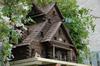
Log Cabin style bird feeder
Joe shares his journey of building a log cabin bird feeder to provide small birds some peace from larger ones, while observing their quirky behaviors …
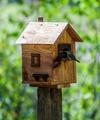
Rough Cedar Birdhouse
Doug shares his cedar birdhouse made with inexpensive fence boards from his local Home Depot. Perfect for the DIY'er on a budget
I've been building …
Unique Birdhouses
Building a birdhouse is one thing, these five woodworkers have some unique creations they've built in their workshops. Read what inspires them to help …
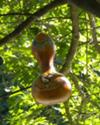
Gourds As Bird Houses
Gourds have been used for birdhouses for thousands of years. Natives would hang them to dry and the birds began using them for nesting. These crafters …
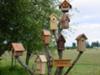
The Birdhaven Story
A simple idea to repurpose tree branches led to the creation of a multi-level birdhouse sanctuary. Discover how different wood types, predator guards, …
Check Out These Decorative - Extreme Birdhouses
Whether youre looking for design inspiration or simply enjoy seeing how others build, join the conversation and share your thoughts on these stunning, …
Keep Predators Away