Irruptive Migration: Why Some Birds Appear Outside Their Normal Range
Irruptive migration is a type of bird movement in which species travel irregularly and unpredictably beyond their normal range in response to sudden food shortages.
Unlike vagrancy, irruptive migration involves large numbers of birds moving in response to ecological conditions, not isolated individuals blown off course by weather.
Most bird migrations follow predictable patterns. Warblers arrive each spring like clockwork and geese fly south every fall on familiar routes.
But some species do not follow a fixed schedule.
Unlike regular migrants that travel the same routes annually, irruptive species may remain in one area for several years and then suddenly appear hundreds or thousands of miles away.
What Triggers Irruptive Migration?
The primary trigger is food scarcity. Many irruptive species depend on food sources that fluctuate dramatically from year to year.
When these resources fail across large regions, birds are forced to search elsewhere.
Common triggers include:
- Seed crop failures in boreal forests(cones, birch seeds, alder seeds)
- Prey population crashes, such as lemmings in Arctic ecosystems
- High population density, which intensifies competition for limited food
Because these conditions are irregular, irruptive movements are unpredictable. They are not tied to a particular season.
This ecological flexibility is what makes irruptive migration difficult to forecast.
Classic Examples of Irruptive Migration
Snowy Owls
Snowy owls are one of the most visible irruptive species. When lemming populations decline sharply in the Arctic tundra, owls are forced to disperse.
This often follows breeding seasons with high owl productivity. Young owls spread widely in search of food.
During irruption years, snowy owls may appear far south of their normal range. They can be seen in farm fields, coastal beaches, airports, and city parks.
Boreal Finches
Finches such as redpolls, crossbills, pine siskins, and evening grosbeaks depend on northern seed crops. Cone and seed production varies greatly from year to year.
When crops fail across large areas, finches move in large numbers. Regions that normally see few of these birds may suddenly host many.
Red-breasted Nuthatches
Some species illustrate irruptive migration especially well. Red-breasted nuthatches are a good example.
In northeast Kansas, I may not see them for several winters. Then they suddenly appear in noticeable numbers.
Can Irruptive Migration Be Predicted?
Only loosely.
Scientists and birders sometimes monitor cone crops or prey populations. These indicators can offer clues.
However, food failures often occur unevenly across wide areas. This makes accurate prediction difficult.
Uncertainty is a defining feature of irruptive migration.
Is Irruptive Migration the Same as Nomadic Movement?
Not exactly.
Nomadic animals wander continuously in search of resources. They do not usually move in large, sudden population waves.
Irruptive migration involves coordinated dispersal. Many individuals move at once after conditions deteriorate across a region.
A Migration Without a Calendar
Irruptive migration challenges the idea that animal movement always follows a schedule. In some ecosystems, adaptability matters more than routine.
These birds move not because the season tells them to, but because survival demands it.
When irruptive species appear far outside their normal range, they offer a glimpse into continent-scale ecological change.
Scarcity drives movement, not predictability.
Related Reading:
 Readers Digest Guide
|
 Golden Guide
|
 Your State Only
|
 Nat-Geo Guide
|

Gene Planker is the creator of Wild-Bird-Watching.com. With more than fifty years of backyard birding experience, he helps readers understand the nesting, feeding, and behavior of backyard birds.



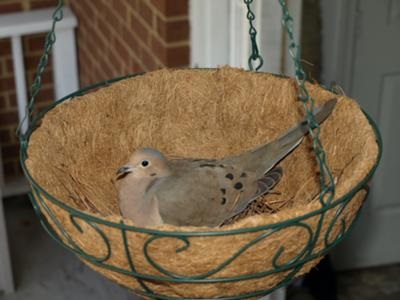

Before trimming shrubs or mowing, check for active nests. Many birds begin nesting earlier than expected, and a quick look can prevent accidentally disturbing a brood.


"What an awesome website. My little one and I enjoy playing the different bird calls and watching some of the videos, thank you!"
– Linda B., Illinois