When Do Hummingbirds Lay Eggs? Nesting by Region
If you have ever watched a hummingbird around your feeder in spring, you may have asked yourself when egg-laying begins.
The answer depends on where you live. In the southern parts of North America, hummingbirds can begin nesting surprisingly early.
In places like Texas and Florida, some species may start as soon as February.
Farther north, including much of Canada, nesting may not begin until June.
Timing the Nesting Season
Hummingbirds do not choose their nesting dates at random. Most species time nesting to match peak flower blooms and rising insect numbers.
That way, food is abundant when the chicks hatch and grow.
Ruby-throated hummingbirds, which are common across the eastern United States, usually lay eggs sometime between late April and July.
On the West Coast, Anna's hummingbirds often begin much earlier.
In mild coastal climates, nesting can start in winter and continue into spring.
Each species follows its own seasonal rhythm shaped by climate and food availability.
How Location Affects Nesting
Geography plays a major role in when egg-laying begins. Warm regions see earlier nesting, while cooler or higher elevations push the schedule back.
These dates can shift from year to year depending on weather.
- Southern United States such as Texas, Florida, and Arizona: late February through May
- Midwest and Northeast: April through July
- Pacific Northwest: May through July
- Canada and far northern states: late May through early August
- Coastal California (Anna's hummingbirds): December through May
Many backyard birders notice the same hummingbirds returning to familiar yards, trees, or even the same branch each season.
Courtship Comes First
Before nesting begins, there is courtship.
Male hummingbirds perform elaborate aerial displays, diving and swooping while producing sharp clicking or buzzing sounds with their feathers.
These displays are brief but intense. Once mating is complete, the male leaves. He plays no role in nest building or chick care.
The female is left to choose a nesting site that is quiet, sheltered, and well hidden.
Nests can be found on tree branches, shrubs, and sometimes surprisingly close to people, such as on porch lights or hanging decorations.
Building the Nest
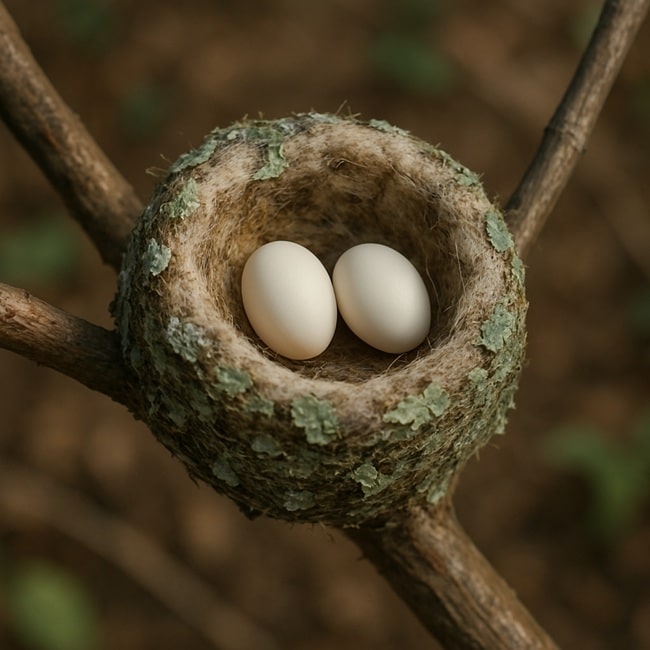
Nest construction usually takes about a week. The female gathers soft plant fibers, moss, lichen, and spider silk.
The spider silk acts as both glue and elastic, allowing the nest to stretch as the chicks grow.
The finished nest is about the size of a golf ball and blends so well into its surroundings that it often goes unnoticed, even when it is close by.
The Eggs
When the nest is complete, the female lays one egg. About a day later, she lays a second. Two eggs are typical for hummingbirds.
The eggs are tiny, roughly the size of a jellybean.
Incubation usually begins after the second egg is laid so that both chicks hatch at nearly the same time.
From Eggs to Flight
The nesting period moves quickly once the eggs are laid.
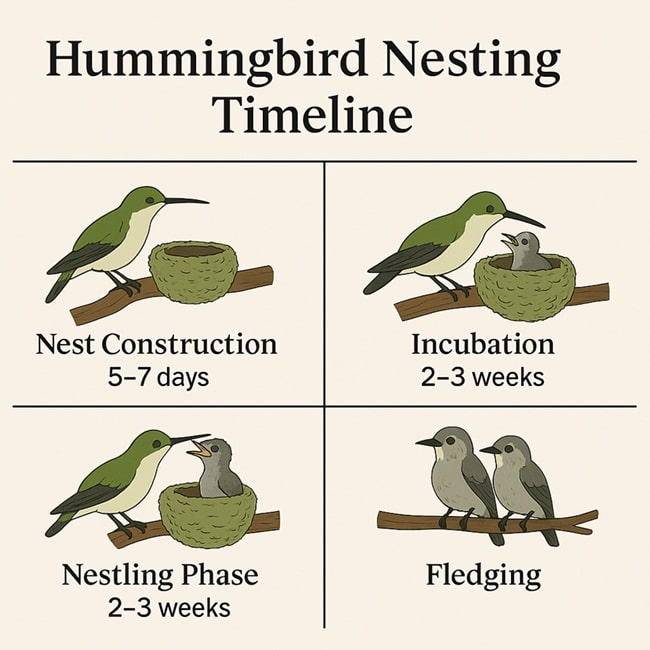
- Nest building: about five to seven days
- Incubation: roughly fourteen to eighteen days
- Nestling stage: about eighteen to twenty-two days
- Fledging: around three weeks after hatching
After leaving the nest, young hummingbirds may remain nearby for a short time while they finish learning to feed on their own.
Grab Your No Strings Download Now
Risks to the Nest
Hummingbird nests face many threats. Jays, snakes, squirrels, and even large insects can prey on eggs or chicks.
Strong winds and storms also take a toll.
Human activity can be a problem too. Trimming shrubs or moving plants during nesting season can cause a nest to fail.
Even repeated close inspection may cause the female to abandon it.
If You Find a Nest
If you spot a hummingbird nest, enjoy it from a distance. Do not touch or move it.
If the nest appears unattended, give it time. The mother may simply be out feeding.
Only if a chick has clearly fallen or is in immediate danger should you contact a licensed wildlife rehabilitator.
Direct intervention usually causes more harm than good.
Encouraging Nesting in Your Yard
If you want hummingbirds to nest nearby, focus on providing a safe environment.
Native plants that bloom at different times are especially helpful.
Avoid pesticides, keep feeders clean, and leave natural materials like small twigs and plant fluff available in spring.
Most important of all, give nesting birds space and leave their chosen sites undisturbed.
A quiet yard can make all the difference when a hummingbird is raising her young.
Related Reading:
 Ant Guard
|
 Aspects Bee Resistant
|
 Aspects High View
|
 Window Mount
|
As an Amazon Associate, wild-bird-watching may earn commissions on qualifying purchases
Credits
Nest Survival and Habitat Use of 3 Resident Hummingbird Species
Trait-mediated trophic cascade creates enemy-free space for nesting hummingbirds

Gene Planker is the creator of Wild-Bird-Watching.com, has over 50 years of backyard birding experience and 18 years managing a 24-unit Purple Martin colony. He's a member of the Purple Martin Conservation Association, Kansas Audubon Society, and National Audubon Society. His guides have helped thousands better understand bird behavior, nesting, and feeding.