Mourning Dove in a Strawberry Planter: What To Do
by Jessica
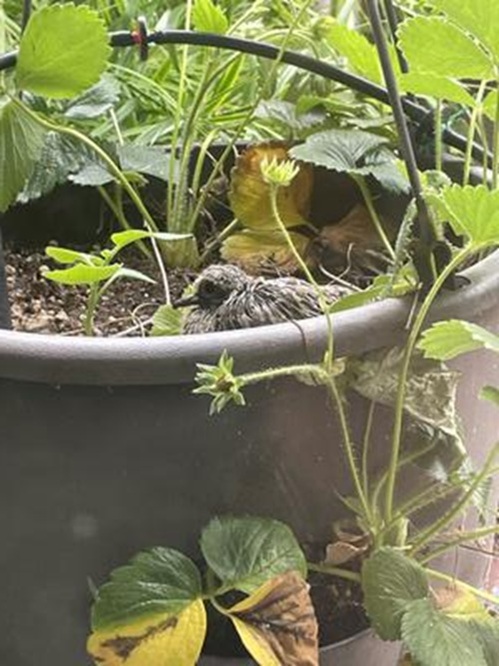
When a Mourning Dove chose my hanging strawberry planter for its nest, I had to adjust how I watered and cared for the container.
Here are the steps I took right away, followed by what I observed as the chick changed during its first several days.
Here are the steps I took right away, followed by what I observed as the chick changed during its first several days.
What I Did Right Away
- I stopped moving or rotating the planter.
- I watched from a distance rather than touching the chick or nest.
- I watered slowly along the side farthest from the nest.
- I kept pets and unnecessary activity away from the area.
- I limited photographs to a few quick visits when the adult was away.
How I Found the Dove Chick
I almost missed the chick entirely.
It was a Tuesday morning, the kind when the light comes in sideways and everything feels a little gilded.
I was doing my usual rounds on the back porch, checking the tomatoes, pinching off basil, and giving the hanging planters a lazy spin so they would receive even sun.
I reached toward the strawberry basket, the one overflowing with runners and a few stubborn green berries that refused to ripen, when something stopped my hand.
A sound. A tiny, papery rustling.
I stood on my toes and peered over the rim. There, nestled between the strawberry leaves and the damp potting soil, was the smallest bird I had ever seen.
A Mourning Dove chick, newly hatched, maybe a day or two old. Its eyes were still closed, and pinkish skin showed beneath a sparse covering of pale down.
It sat hunched in a shallow nest among the plants, its oversized head bobbing slightly with each breath, as though it were too heavy for that fragile neck.
I did not breathe for several seconds.
I had noticed a pair of Mourning Doves perching on the porch railing during the previous weeks, but I had given them little thought. Doves were everywhere.
They cooed from the gutters and wandered across the driveway. I had no idea they had quietly chosen my strawberry planter as a nursery.
I stepped back carefully, the way you do when you have accidentally entered someone else’s private moment.
For the rest of the day, I found myself drifting toward the window.
An adult dove returned within the hour and settled among the leaves with such practiced calm that I felt, by comparison, like a complete wreck.
A few days later, I returned with my camera.
By then, the transformation was already underway, which explains why the chick looks much older in the photograph than it did when I first found it.
Its eyes were open, gray-brown pin feathers covered its wings and back, and some of the feather sheaths were beginning to open. Wisps of yellow down still clung to its head and body.
I began watering only along the opposite edge of the planter, pouring slowly enough that the nest remained dry. The strawberries would manage.
Some things matter more than a harvest.

Seasonal Tip

Before trimming shrubs or mowing, check for active nests. Many birds begin nesting earlier than expected, and a quick look can prevent accidentally disturbing a brood.


What Readers Say
"What an awesome website. My little one and I enjoy playing the different bird calls and watching some of the videos, thank you!"
– Linda B., Illinois