The Bald Eagle Nesting, Breeding, and Feeding Habits Explained
The Bald Eagle is only found on the North American continent. Some first-time eagle watchers become lifetime birdwatchers once they've seen this majestic bird.
Listed for years on the endangered list, they have made a remarkable comeback. With hard work and educating the public, future generations will enjoy watching these birds.
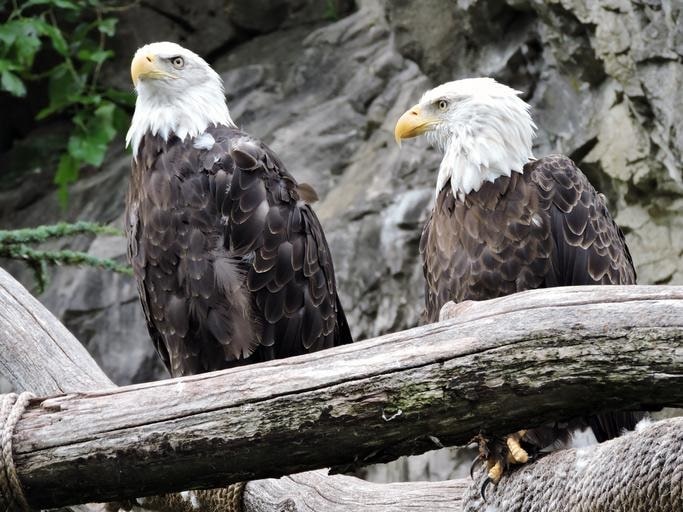
Two Bald Eagles Perching on Tree Limb
In this article, we'll discover the Bald Eagle and its nesting, feeding, mating habits, and lifespan.
Description - What They Look Like
Full-grown, the Bald Eagle weighs between 9-12 pounds and has a wingspan of up to 8 feet. Adults have a white head and tail and a length between 35-40 inches.
This makes them one of the largest birds in North America. Females are larger than males.
Those that live in the northern United States are larger than those that live in the south.
Studies have shown life spans of up to 40 years in the wild, and even longer in captivity.
Bald Eagle Call - Sound
Bald eagles are at the top of the food chain and can be an indicator of the health of our ecological system.
After significant population declines, they were listed as endangered in 1978. By 1995, their status was upgraded to "Threatened".
They continue to be protected under the Bald and Golden Eagle Protection Act, and the Migratory Bird Treaty Act.
The most current count is from the 2020 U.S. Fish and Wildlife Service report of 316,700 Bald Eagles, which includes 71,467 active nests.
What Do Bald Eagles Eat?
Feeding mainly on fish, they are also skilled hunters, able to capture waterfowl in flight and rabbits on the run. During fall they will eat the migrating American Coots.
Those in Alaska will also feed on the returning salmon as they return to spawn.
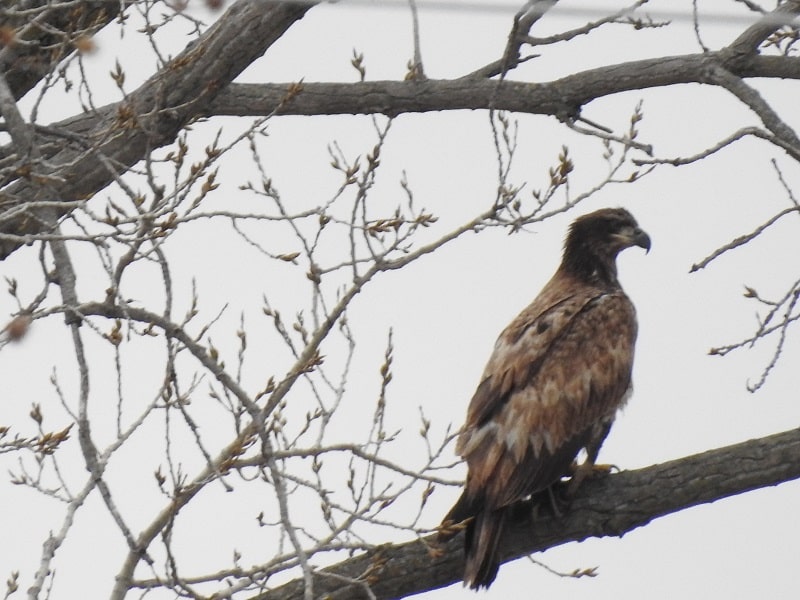
Immature Bald Eagle
How Fast Can Bald Eagles Fly?
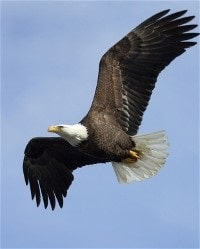
Flight speeds up to 30 m.p.h. have been recorded and diving speeds up to 100 m.p.h. Their keen eyesight allows them to spot fish at distances up to a mile.
Catching their prey in their talons and carrying it off, Bald Eagles are capable of lifting about 4 pounds.
Eagles live near large bodies of open water such as lakes, marshes, seacoasts, and rivers, where there is plenty of fish to eat and tall trees for nesting and roosting.
Bald Eagles have a presence in every U. S. state except Hawaii.
Breeding Season and Mating Habits
The breeding season for Bald Eagles varies depending on their location, but it generally occurs from late fall to early spring.
In the southern parts of their range, such as Florida, breeding may begin as early as October, while in the northern regions, such as Alaska, it may start later, around April.
Before mating, bald eagles engage in a courtship display that involves several distinctive behaviors, such as calling, diving, and cartwheeling in midair.
They also perform a series of acrobatic flights, with the male often chasing the female and presenting her with gifts, such as sticks or fish.
Copulation: Bald eagles mate by joining their cloacas (the opening used for both reproduction and waste elimination), in a process that lasts only a few seconds.
This usually occurs on or near the nest and can happen multiple times throughout the breeding season.
Do Bald Eagles Mate for Life?
Monogamous and mating for life, an adult will only select another mate if its companion should die.
Nesting Habits
The nest is a massive platform nest of sticks and vegetation lined with moss and grasses is placed on a cliff ledge or in the fork of a tree. Usually, 10-180 ft. high.
The video below shows a Bald Eagle nest and how the male and female switch incubation duties.
Nests materials are added each year, making them quite large. Some nests reach sizes of more than 10 feet wide and can weigh several tons.
When a nest is destroyed by natural causes, it is often rebuilt nearby. Bald Eagles may have a second nest in the same territory.
Eggs are laid anywhere from October to mid-April depending on latitude. Southern populations begin laying earlier than northern eagles.
The female will lay between 1 and 3 eggs. These eggs can weigh around 1/4 pound. One egg is laid per day, but not necessarily in successive days. Egg laying is completed in 3 to 6 days.
Males and Females incubate the eggs for 34 to 36 days (gestation period isn't the term used with birds) after which the young birds emerge (hatch).
For the first 2 to 3 weeks, the female tends to the eaglets in the nest while the male brings food.
After this time, the female begins feeding the young at the same rate as the male. The adults will bring 4 to 5 of their prey to the nest each day.
| Bald Eagle Nesting Stats | |
|---|---|
| Eggs | 1 - 3 |
| Incubation | 34 - 36 days |
| Nestling Phase | 10- 14 weeks |
| Broods | 1 |
At 10 weeks of age, the young will have 7000 feathers. At 10-14 weeks old, the young will make their first flight from the nest.
These young fledglings may return to the nest at night to roost. The adults have been roosting in nearby trees for weeks and not sleeping with the young.
The young are mottled dark brown with some white mixed in. The young won't get the white head and tail feathers before their fourth or fifth year.

Bald Eagle about to Catch Fish
Only about 50% of eaglets hatched survive the first year. Eagles migrate in winter and often roost and hunt in groups along waterways that don't freeze and have abundant food.
These eagles can be sedentary creatures often remaining on the same perch for hours at a time.
This sedentary behavior allows birdwatchers a great opportunity for viewing or photographing.
There are many websites with cams that you can watch live during the nesting season. Just Google Bald Eagle cam.
Lifespan
The Bald Eagle has a lifespan of around 20 to 30 years in the wild. However, there have been reports of some individuals living up to 40 years.
Their longevity is influenced by various factors such as food availability, environmental conditions, and human impact.
What Eats Bald Eagles?
Raccoons, crows, hawks, and owls will prey on the eggs and young of eagles. Humans are the main threat to Bald Eagles but are also their main protectors.
Arkansas is a hotspot for Eagle Watching check this article out.
Perfect Gift Idea - Heated Bird Baths
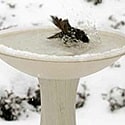 Heated Pedestal Baths |
 Heated Ground Bath |
 Heated Deck Mounted |
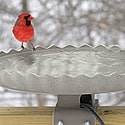 Scallaped Deck Mounted |