Purple Finch Mating, Nesting, and Feeding Habits Explored
Description
The Purple Finch is often confused with the much more common House Finch that birders see at their feeders.
The male Purple Finch is about 6 inches and has a raspberry or wine-colored upper part, breast, and flanks. The bird's colors are brightest in summer.
The head of the male Purple Finch is covered with red and little or no brown streaking on the breast or flanks.
Behind his eye, the male Purple finch has a faint dark bar with the same being true on his jaw.
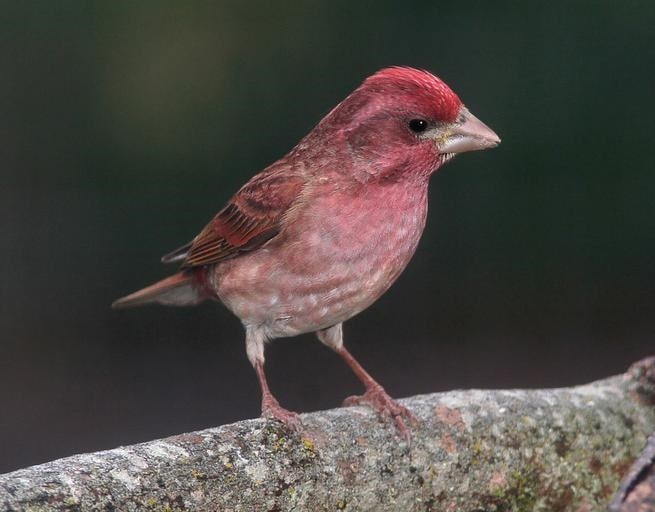
Male Purple Finch
The female has a well-defined pattern on the face, broad white eyebrow, brown eyeline, and white cheek.
Her underparts have broad, blurry, brown streaking with no streaking on under-tail coverts.
The white above and behind the eye on the female Purple Finch is the best way to distinguish it from the Female House Finch.
The immature birds, both male and female, look like the adult female.
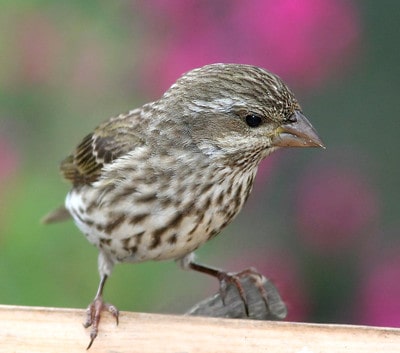
Female Purple Finch
The range map posted further below can help in deciding whether the Purple Finch is a resident in your area.
Purple Finch Call/Song
Mating Habits
During the breeding season, males will sing from a high perch to attract females and establish their territory. Their song is a series of melodious, warbling notes.
When a female approaches a singing male, he may engage in a courtship display, which includes puffing up his feathers, hopping around, and fluttering his wings.
The male may also be holding nesting material in his beak as a courtship gesture.
Although he may bring a small amount of nesting materials to the nest site, it's the female Purple finch that selects and builds the nest.
Nesting Habits
Once the female selects the nesting site, she builds the nest. The shallow cup nest is made of twigs, grasses, and rootlets lined with animal fur, fiber, and fine grasses.
The nest is placed in the crotch of a tree, usually a conifer, about 5 to 60 feet above the ground.
The female will lay and incubate 3 to 6 eggs that are light green-blue with dark marks. Once incubation begins, she rarely leaves the nest.
So reluctant to leave the nest that during studies, researchers sometimes had to lift the female off the eggs to count them.
Males will feed their mates regurgitated seeds. The incubation (gestation period isn't the term) time will last about 13 days. The young will leave the nest about 14 days after hatching.
| Purple Finch Nesting Stats | |
|---|---|
| Eggs | 3 - 6 |
| Incubation | 13 days |
| Nestling Phase | 14 days |
| Broods | 1 - 2 |
The diet of the chicks is almost all seeds. Purple Finches will have 1 - 2 broods each season. Most likely a new nest for any second brood.
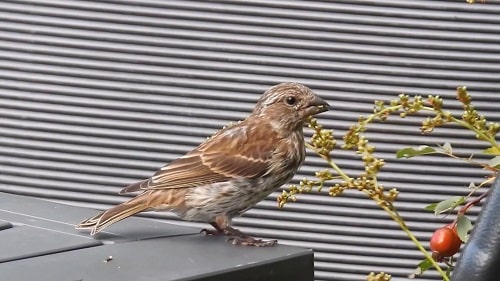
Feeding Habits/What Purple Finch Eat
In the wild Purple Finches forage both on the ground and above in foliage for seeds and buds of trees, weeds, berries, and insects.
Putting out a birdfeeder with black-oil sunflower seed will give you the best chance of attracting them if they are in the area.
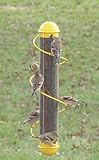
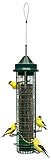
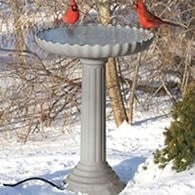
Consider setting up a feeding station using both Sunflower Seed Feeders and Thistle/Nyjer Feeders for the best results. Don't forget the importance of a heated birdbath for a winter water source.
Habitat
In general, Purple Finches prefer to breed in areas with dense vegetation, especially conifers or mixed conifer-deciduous forests. They may also be found in open woodlands, shrublands, and other areas with mature trees and shrubs.
During non-breeding, Purple Finches have a wide range of habitat preferences, ranging from evergreen forest to mixed upland wood, orchards, parklands, and backyards.
The range map below shows the breeding, non-breeding and year-round range where and when you're likely to see them.
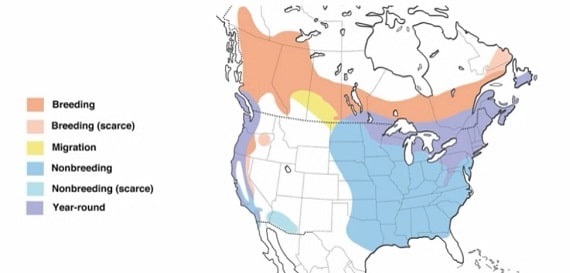
Purple Finch Range Map
Lifespan
The average lifespan of the Purple Finch is 3 - 4 years, with many reaching 6 - 7 years.
Predators of Purple Finches
Predators include California Scrub Jays, Sharp-shinned hawks, Bluejays, and Barn Owls. Predators of eggs and nestlings include Bluejays, Common Grackle, and Red Squirrels.
Explore the differences between the House Finch and Purple Finch Differences
|

|
|
|
| Birds and Blooms | Pioneer Woman | People Magazine | First For Women |