How Birds Feet, Toes, Work and Keep From Freezing, Getting Electrical Shock
Ever wonder how a birds feet keep them from falling off branches while they sleep?
Or how they keep from freezing in the winter snow? Why don't birds freeze to metal?
Birds toes give a bird the ability to grasp a branch and not fall off due to the action of tendons.

Fox Sparrows Use Their Feet to Uncover Insects in Leaf Litter
These tendons are pulled tight when a bird crouches on a perch.
The tendons are attached to muscles above the bird's heel-the joint that looks like a backward knee to us.
The particular tendons are called flexor tendons and they run down the backs of the legs and to the tips of the toes.
When the bird sits, the tendons pull on the toes and close them tightly, like a fist.
This automatic grip is strong enough to allow the bird to sleep while perching.
The same mechanism is at work when a raptor captures an animal, serving to clench the talons and pierce the prey on impact.
Woodpeckers Feet and Toes
Woodpeckers are slightly different in that instead of three toes facing forward and one facing back, Theirs have two forward and two back.
This allows for greater support in the way they forage for food.
Along with this toe arrangement, they also have stiff tail feathers that add even more support.
Why Birds Feet Don't Freeze to Metal
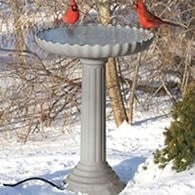
So, why don't birds freeze to the bird bath or on a metal perch of a bird feeder.
This is due to the circulatory system of birds that help maintain temperatures.
Birds have a cluster of veins and arteries that redirects blood flow so as to reduce heat loss.
This cluster is referred to as a "heat exchanger." Warm blood flowing through arteries would normally flow into the bird's legs before returning to the heart.
When the legs are cold the artery in each upper leg constricts and forces blood to flow through the heat exchanger.
Without going into a lot of detail, the cold blood rubs against the warm blood and this allows the blood to flow to the birds toes without much heat loss to the environment.
Add the limited amount of muscles in birds feet and you'll need less to keep warm.
I might add, don't withold water during winter for fear of freezing birds. They need water and know what to do during cold winters.
There are other ways that birds keep warm, those include; fluffing feathers, lowering body temperature, picking one foot up into belly feathers. Also, roosting in heavy shrubs among other things.
Source: Smithsonian Q&A - Birds
You Might Also Like:
Find out Why Do Birds Keep Flying Into Windows?
|

|

|

|
| Birds and Blooms | Pioneer Woman | People Magazine | First For Women |