Exploring the Blue Jay Habits - What they Eat, Where they Nest
The Blue Jay (Cyanocitta cristata) is a prominent bird species found in the eastern parts of North America.
Known for being a noisy bird with a striking blue crest, and sometimes aggressive behavior, the Blue Jay is a familiar sight in most city parks and forest edges.
It may surprise some that the bird isn't blue. To explain, when light strikes the Blue Jay feathers, all the colors can pass through except for the blue.
The blue feathers of the bird are what the human eye sees because of the refraction of this blue color.
If you find one of its feathers, hold it in different positions and you'll see that it is much darker and closer to brown.
While some might consider the Blue Jay to be a bully at the bird feeder, most birdwatchers welcome this blue and white bird to our yards.
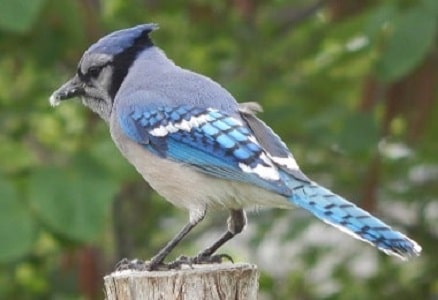
Blue Jay at Rest
Blue jays are a common bird east of the Rockies and can be found in mixed coniferous forests and woodlands, as well as in residential areas where large oaks provide a food source.
You can attract them by placing peanuts on a platform feeder for them to eat.
Blue Jay Call - Song
The first call is the "jeer" sound, used as a contact or flocking call to gather other Jays so they can mob a predator. Sometimes it's used simply to locate its mate.
The second sound is one of many "Pump Handle" calls. The Blue Jay will bob up and down when giving this sound, which may be associated with courtship.
The third is most likely an intra-pair contact call used just between the pair during the nesting cycle and varies between pairs.
Description
The Blue Jay is a medium to large songbird, ranging in length from 9 to 12 inches. Their crown and crest are gray-blue.
A white wing bar with black bands adds to its distinctive appearance. The tail feathers are a bright blue with black bands.
The most common feature is the bird's narrow black necklace of black feathers across the throat and around the head.
The upper parts are bluish gray and brightest on the rump and a white underbelly
The lower breast, belly, and vent areas are off-white. The bill, legs, feet, and eyes, are black.
These birds can raise and lower their crest as they respond to their surroundings. Not all crested birds have this ability.
Difference Between Male and Female Blue Jay
The main difference between male and female Blue Jays is size. The female tends to be smaller than the males.
However, if you spend some time watching them, this bird species has noticeable differences between birds.
Look closely at their heads to notice eyeline differences or the size of the banding around the neck.
Even different shades of their blue color. These are just examples, but they can help you distinguish between a male and a female or one male to another.
Feeding Habits, What Do Blue Jays Eat
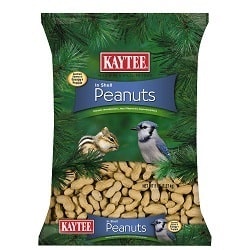
At bird feeders, Blue Jay's eat a variety of foods. They are quick to dine on peanuts, suet, and black-oil sunflower seeds offered on a tray feeder.
The shelled peanuts will need to be in a Peanut Feeder to keep the squirrels from eating them. The Blue Jays will eat plenty!
The Blue Jay's diet in winter consists mainly of vegetable matter, acorns, beechnuts, seeds, and berries.
Watch closely as they pick up a peanut, then put it down and select another. They are looking for the heaviest nut which they know has the most meat.
After making their choice, they fly off to eat it or store it for later by burying it in the ground or hiding it behind tree bark.
Feeding on Bradford Pear Seeds
In summer, they eat larger insects like grasshoppers and caterpillars. They will also eat bird eggs, baby birds, and mice.
Although known to rob the nest of other birds, only a small percentage of their diet comes from these sources.
Typically, the Blue Jay bird is vegetarian in winter and eats wild seeds and berries from woodland shrubs.
When feeding birds, I like to offer food types that are preferred by each species.
Blue Jays prefer larger foods like peanuts and are more likely to eat them than fighting for a single seed from the sunflower feeders.
I place peanuts (unshelled) on a platform feeder to keep these birds happy and to make it easier for the smaller birds to feed from hanging feeders at the same time.
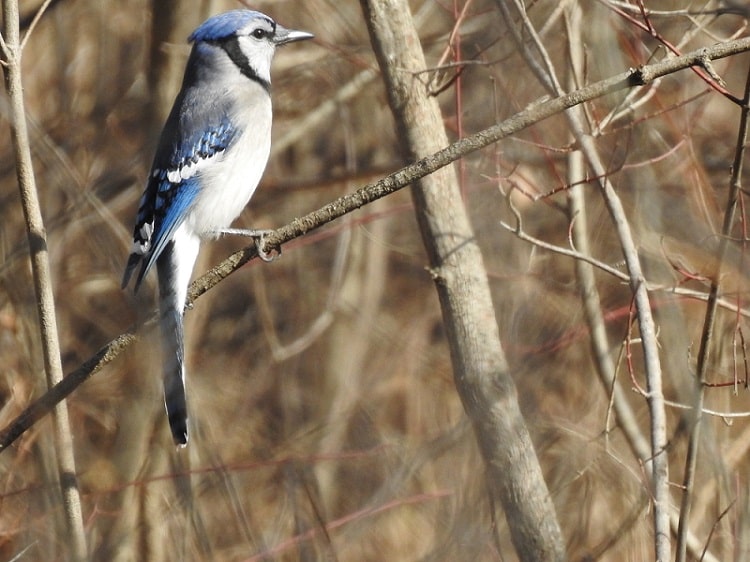
Blue Jay Perched on Tree Branch
Watch them and you'll see as they hold the nuts with their feet and then crack the shell with their bill.
Often they'll cache their food. I was watching one day as the bird came for one peanut after another from the feeder in the backyard just to hide them on my front lawn.
I have to admit, I stopped feeding peanuts for a few days. When I started feeding again I placed fewer in the feeder.
Breeding Season, Mating Habits of Blue Jays
Beginning in early May, the Blue Jay's breeding season and courtship habits begin.
A group of seven or more will gather together at the top of a tree. One female will be among this group.
When the female flies off, the males will follow and land near her. Bobbing their heads up and down and displaying for her.
The female will eventually select a mate from this group, and the nesting cycle will follow.
Nesting Habits of Blue Jays
The Blue Jay nest is a bulky cup made of twigs, leaves, roots, grass, moss, and sometimes held together by mud1. Usually placed between 8 to 30 feet above the ground.
The female Blue Jay begins egg-laying anywhere from early April to mid-May depending on whether nesting in the south or north.
Once the nest is completed, the female will lay 3 to 7 greenish buff, blue, or yellow eggs with brown or grey spots.
Incubation, (gestation period is not the term) lasts 17 to 18 days. Incubation is primarily done by the female with some assistance from the male.
The male will feed the female while she sits on the nest incubating. She may leave from time to time to bathe and stretch.
The young will leave the nest about 17 to 21 days after hatching. Both parents share in feeding the young birds.
1 - 2 broods get raised each season. Sometimes Blue jays will refurbish and reuse the nest for their second brood.
Eggs - Incubation - Time in Nest - Fledging
| Blue Jay Nesting Stats | |
|---|---|
| Eggs | 3 - 7 |
| Incubation | 17 - 18 days |
| Nestling Phase | 17 - 21 days |
| Broods | 1 - 2 |
Once the young jays leave the nest and are not being fed by the adults, they will group with others the same age.
After the nesting season in late summer and early fall, Blue Jays will travel in small flocks and family groups.
Blue Jays do not use their nest during winter. Sometimes nests will be used again in successive seasons, but most build new nests.
Although only partially migratory (mainly permanent residents) sometimes flocks numbering over 100 can be spotted moving south.
Do Blue Jay's Mate for Life?
Once paired, Blue Jays will be mated for life and remain monogamous.
If one of the pair dies, the remaining partner will find a new mate.
Giving a "Pump Handle" call
If a predator, whether a hawk or cat, enters the territory of the nest, the Blue Jay will make an alarm call.
This attracts other Jays in the area and they will all mob the intruder. These groups of Blue Jays are called a "crowd".
Blue Jays are extremely territorial, often diving at cats, dogs, and even humans who get near nesting and feeding territories.
They may be loud and fly close enough to brush against you. They don't attack like a Barred owl.
If possible, the best thing is to stay out of the area for a few days. Otherwise, just limit the time you spend near their nest site or their young.
You also may be standing near their newly fledged young, so be aware of your surroundings and act accordingly.
They are just protecting their young and their food territories. Don't make a big deal about this. You may never see this behavior.
Mainly found east of the Rocky Mountains, Blue Jays have been declining in numbers due in part to the reductions in forest and woodlands, specifically oak trees, which provide acorns, the favorite food of Blue Jays in the wild.

Blue Jay Sunning
Blue Jays are members of the Corvid family, which includes Crows, Jays, and Magpies. A common trait of this family of birds is their ability to imitate various sounds.
Often when flying towards a bird feeder, they'll deliver the calls of birds of prey. The most common calls are those of Red-shouldered hawks, Red-tailed hawks, and Cooper's Hawk call. They've been known to imitate Crows and cats too.
In captivity, they have learned to make the sounds of some cell phone tones.
Blue Jays spend their nights in dense shrubs and during winter will gather in evergreen trees like cedars that provide warmth and cover.
Do Blue Jays Go South in Winter?
Mostly a permanent resident throughout its range with some small migration movements South. Blue Jays do not hibernate as some have asked.
Watch a baby Bluejay leave the nest.
Predators - Who Eats Them?
We've discussed what Blue Jays eat, but what potential predators do they have?
Predators of adult Blue Jays include Hawks and Owls.
The nestlings (baby Blue Jays) predators include crows, snakes, cats, opossums, and raccoons.
Although not a primary food source for squirrels, the squirrels will eat the eggs and young when food is in short supply or easy to do so.
Lifespan - How Long Do Blue Jays Live?
How long the Blue Jay lives depends on whether it makes it through its first year.
First-year birds have the highest mortality rate. If they survive their first year, Blue Jay's lifespan can average 7 years.2
The oldest banded Blue Jay bird was 26 years old.
Read More About What Blue Jays Eat
Products Mentioned in Article
|

|

|

|
| Birds and Blooms | Pioneer Woman | People Magazine | First For Women |
Perfect Gift Idea - Heated Bird Baths
 Heated Pedestal Baths |
 Heated Ground Bath |
 Heated Deck Mounted |
 Scallaped Deck Mounted |